


Coímbra, Portugal
Private Tour in Coimbra and Conímbriga — Full-Day Cultural Experience
9 horas
A partir de€468.00/ personaThis private cultural tour in Portugal combines historic Coimbra with the tranquil scenery of the Buçaco National Forest, including a relaxed Coimbra day tour from Porto and a gentle Buçaco forest walk.
Política de anulación
Consulta la política del proveedor más abajo antes de reservar.
Duración 9 horas
Duración facilitada por el proveedor de la experiencia.
Idiomas
portugués, inglés, español, francés
Tamaño del grupo
De 1 a 7 viajeros
This private cultural tour in Portugal offers a refined full-day experience combining the historic atmosphere of Coimbra with the serene landscapes of the Buçaco National Forest. Designed for travellers who value comfort, scenery, and meaningful cultural encounters, this scenic private tour from Porto unfolds at an unhurried pace with a private guided tour and premium transportation throughout the day.
The morning is dedicated to historic Coimbra, a city set on a hill above the Mondego River and shaped over centuries by learning, faith, and tradition. The visit begins at the University of Coimbra (UNESCO World Heritage Site), located within the former Royal Palace. From its elevated courtyards, the city reveals itself gradually, offering both panoramic views and a strong sense of place.
A highlight of the visit is the Biblioteca Joanina, one of Europe’s most impressive Baroque libraries. Beyond its decorative beauty, the library offers a quiet, immersive atmosphere where architecture, woodwork, and light were carefully designed to preserve knowledge across generations.
From the university hill, the tour continues on foot through the historic centre of Coimbra, following narrow medieval streets toward the lower town. Along the way, the exterior of the Sé Velha (Old Cathedral) reflects the city’s Romanesque past, while passage through the Arco de Almedina marks the transition between the upper and lower city. The morning concludes at the Monastery of Santa Cruz, an important spiritual and cultural landmark closely connected to the origins of Portugal.
After Coimbra, the journey continues north, with a recommended lunch stop in Mealhada. Guests who wish may enjoy one of Portugal’s most iconic Portuguese food experiences: Leitão à Bairrada, traditional roasted suckling pig, known for its crisp skin, tender meat, and local sparkling wine pairing.
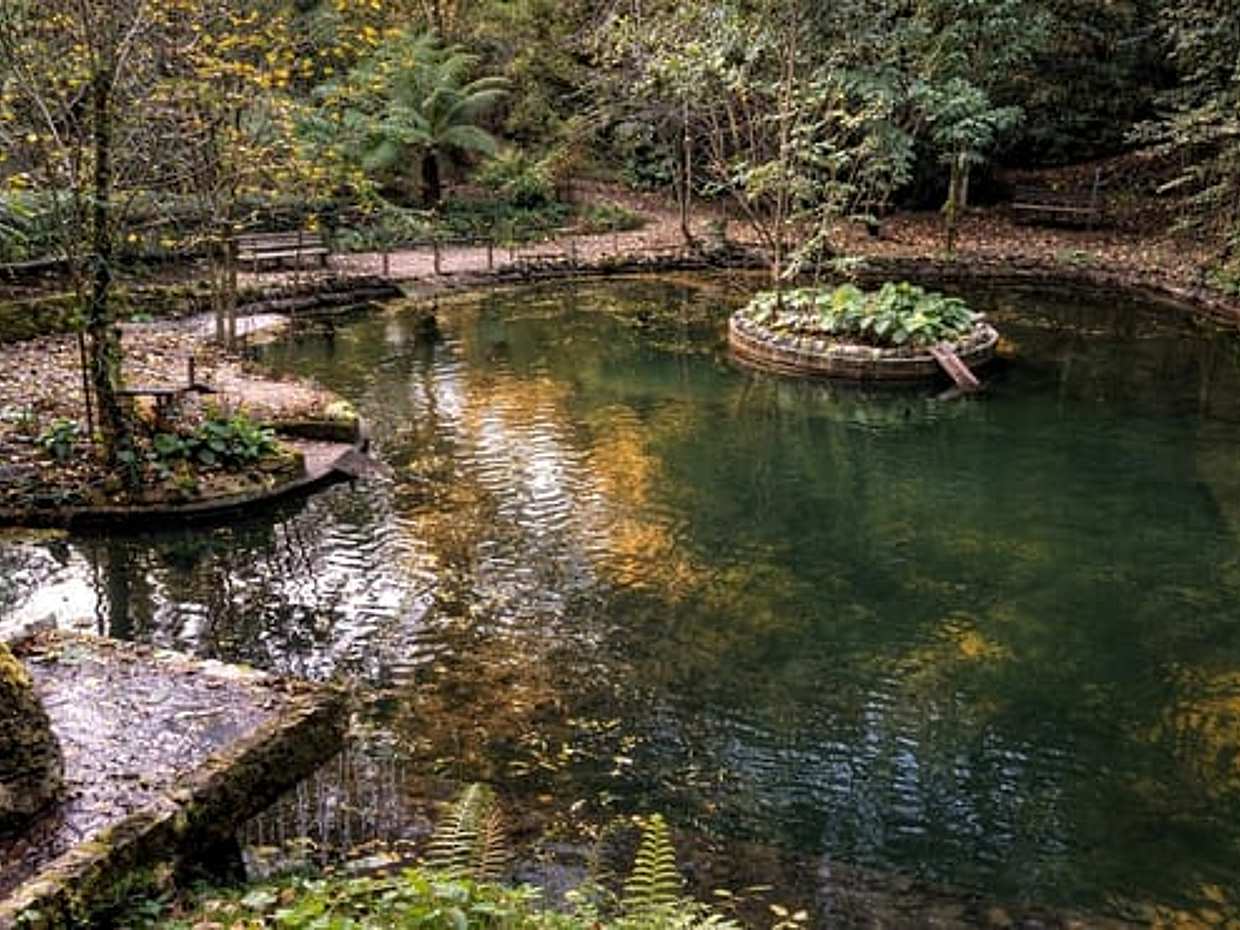
The afternoon unfolds in the calm surroundings of the Buçaco National Forest, one of Portugal’s most remarkable natural and historical landscapes. Enclosed by ancient walls, this forest combines botanical richness with a sense of quiet retreat. A gentle walk along the Buçaco forest walk, following the Luso Water Trail, offers an easy and relaxing way to experience the area’s natural beauty, making it ideal for travellers seeking easy walking trails in Portugal.
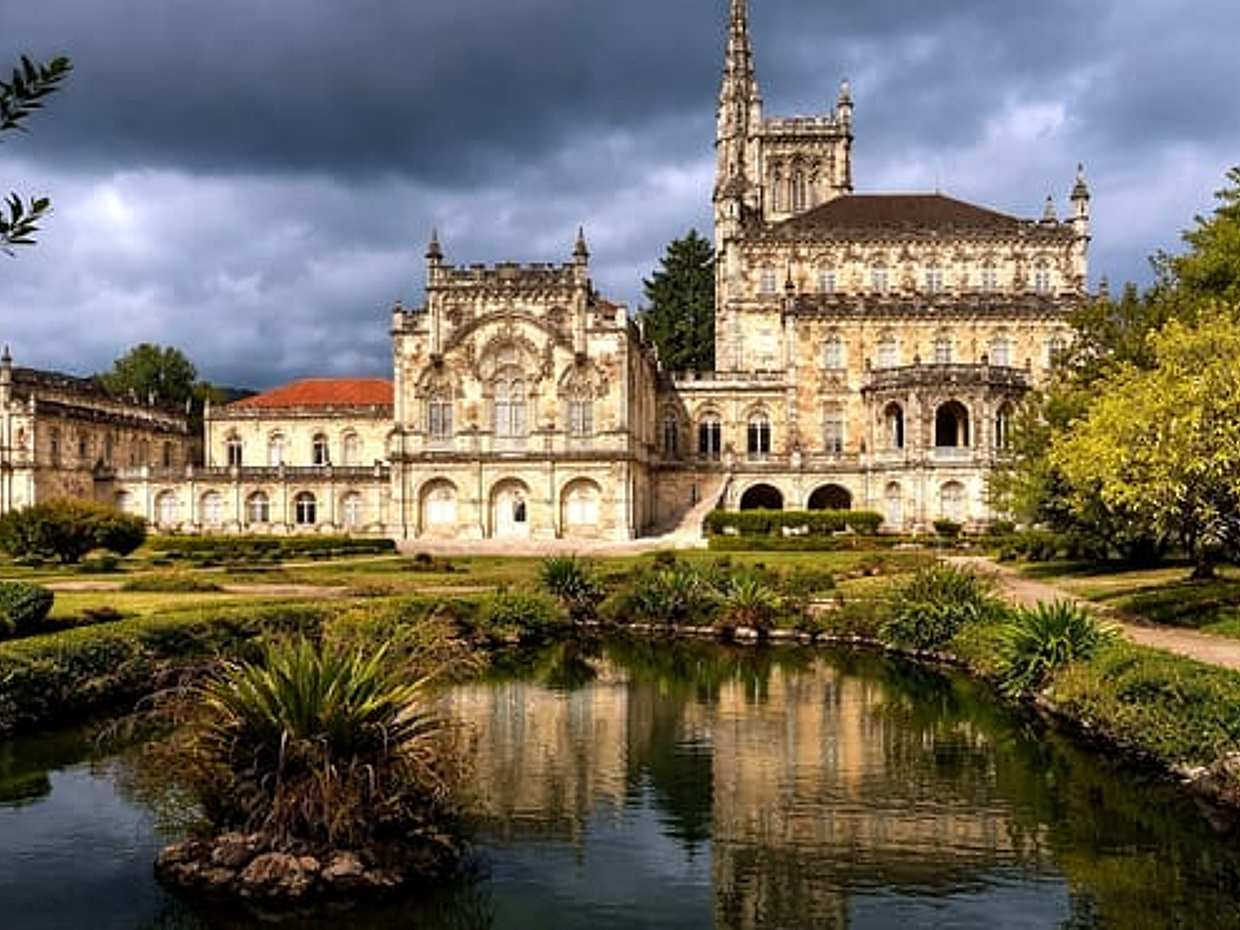
The visit continues with an exterior guided interpretation of the Buçaco Palace Hotel, an iconic building rising unexpectedly from the forest. Designed by Luigi Manini in a neo-Manueline style, the palace evokes Portugal’s maritime heritage through its ornate stonework and fairytale presence.
Nearby, the former Buçaco Convent recalls the forest’s earlier role as a place of spiritual retreat. Founded in the 17th century by the Discalced Carmelites, the convent was designed for contemplation and isolation, blending seamlessly into the surrounding landscape.
This luxury private tour in Portugal concludes with a comfortable return journey, bringing together culture, nature, and gastronomy in a balanced and visually rich experience. Ideal for travellers seeking a calm yet engaging nature and culture tour, this day offers a thoughtful introduction to central Portugal beyond the usual routes.
Transparency note: meals are not included. Monument and experience tickets are selected separately in the second step of the booking process, so you can choose exactly what you want to include. This ensures clear pricing, with no hidden costs, no unnecessary mark-ups, and no commissions added by us or our partners.
Monumental Stairs. Built in the 17th century by Gaspar Ferreira, these stairs create a dramatic link between the Universityand the city below. They were designed to give visitors a true sense of arrival at Coimbra’s hilltop of knowledge.
Aqueduct of São Sebastião (Arcos do Jardim). Built in 1570 under King Sebastião, reusing the path of a Roman aqueduct. Its arches carried water into the upper city and still stand today as a picturesque backdrop beside the Botanical Garden.
Statue of Kind Dom Dinis. The Statue of King Dom Dinis in Coimbra honors King Dinis of Portugal, founder of the University of Portugal in 1290. Located near the University of Coimbra, it symbolizes his role in promoting education, culture, and strong governance, reinforcing Coimbra’s importance as Portugal’s academic center.
Iron Gate. Once the entrance to the Royal Palace, built in 1634. The two grand portals show sculptures representing the University’s great faculties: Medicine, Law, Theology, and Canon Law. Above, you’ll see King Dinis (the University’s founder), King João III (who reformed it), and the figure of Wisdom — the soul of knowledge.
Via Latina. The Via Latina is an imposing colonnade erected between 1773 and 1777. Its name stems from an old tradition at the University of Coimbra, which forbade the use of any language other than Latin for students passing through it. This space, of great symbolic importance, reflected the centrality of Latin in academic life at the time, since Latin was the official language of university education, especially in the fields of Philosophy, Theology, and Law. The Via Latina is thus an architectural landmark that recalls one of the most deeply rooted practices in the history of the University of Coimbra and, at the same time, a testament to the grandeur and prestige the institution held at the time.
Tower of the University of Coimbra. The ex-libris of Coimbra, built in the 18th century to replace an older tower. Designed by António Cannevariwith Baroque influence and completed by Gaspar Ferreira. At the top, four clocks and four bells — the famous “Cabra” among them — have long regulated student life, from classes to curfews.
Royal Palace of Alcáçova. For centuries the seat of Portuguese kings, later transformed into the University’s main building. Here, royal power gave way to intellectual power. The building currently known as the Royal Palace was built at the end of the 10th century, serving as a fortressfor the governor of the city during Islamic rule. In 1131, it became the first Portuguese royal household, the residence of Afonso Henriques, the first king of Portugal. In 1537, during the reign of King John III, the University was permanently relocated from Lisbon to Coimbra, having been established in this building in 1544.
Chapel of St. Michael. The chapel dedicated to Saint Michael was also part of the palace and therefore held the status of Royal Chapel, a status it never lost, even when, in the 16th century, it began to be used by the academic community. Completely rebuiltaround 1520, the University Chapel was gradually enrichedover the following centuries, notably with the 17th-century tilework, the 18th-century Baroque organ, the doctoral benches in the main chapel where the doctors sit, and the large early-17th-century gilded altarpiece, featuring a grand Eucharistic throne at its center from the late 18th century.
Academic Prison. The Academic Prison, created in 1593. Here unruly students — whether for wine, fights, or politics — once served time. Installed in the lower floors of the Joanina Library in the mid-16th century, the Academic Prison of the University of Coimbra is a rare European example of an old private jail, and it is also the only medieval prison still existing in Portugal, having functioned here until 1834. Since 1309, the University of Coimbra enjoyed legal autonomy, which granted it certain privileges. This autonomy, known as the academic jurisdiction, aimed mainly to maintain organization, discipline, and order.
Joanina Library. The Baroque Library is the best example of Portuguese Baroque and is considered to be one of the richest European libraries. It is also known as the Joanina Library in honour and memory of King John V, who authorised its construction and whose portrait, painted by Domenico Duprà, distinctly dominates the space inside the Noble Floor. Construction on the Baroque Library was completed in 1728. It functioned as the University Library from 1777 until the first half of the 20th century. It holds 60 thousand books, dating from the 16th century to the 18th century, on a wide variety of topicsthat can still be consulted today.
Statue of King João III. Monument to King João III — inaugurated in 1948, this monumental statue celebrates the figure of King João III, the monarch who consolidated the Estudos Gerais in Coimbra, elevating them to the status of a permanent university in 1537. The work, by Francisco Franco, one of the leading sculptors of the Estado Novo regime, reflects the historicist and modernist styleassociated with the official ideology of the time.
Old Cathedral of Coimbra. Consecrated in 1117, one of Portugal’s finest Romanesque churches. Its fortress-like walls remind us that churches once served both prayer and defense. Early Portuguese kings attended Mass here, swords at their sides.
Arch and Tower of Almedina. The main medieval gateway into Coimbra. Its earliest parts date back to the 9th century, later remodeled under King Manuel I. The tower, built in the 11th century under Count Sesnando, defended the city’s heart. Imagine traders, pilgrims, and students entering the old walled town through this arch.
Church and Monastery of Santa Cruz. Founded in 1131 with the support of King Afonso Henriques. Once the most important Augustinian house in Portugal, it became a center of learning and politics. Inside lie the tombs of Portugal’s first kings — including the nation’s founder.
Buçaco National Forest. The Mata Nacional do Buçaco is a unique natural and cultural heritage in Portugal, combining history, religion, military legacy, botanical diversity, and landscape beauty. Located on the Buçaco mountain, at an altitude of 547 meters, the Buçaco National Forest is enclosed by a historic wall with eleven entrance gates, offering a magical setting for a nature walk surrounded by lush green scenery.
Buçaco Palace Hotel. Considered one of the most beautiful hotels in the world, the Buçaco Palace Hotel rises majestically in the heart of the Buçaco National Forest, evoking a true fairy-tale atmosphere. Designed by Luigi Manini, this remarkable palace is inspired by Manueline architecture, recalling iconic monuments such as the Belém Tower and the Jerónimos Monastery, with an exterior and interior rich in ornate details and symbolism.
Convent of Santa Cruz of Buçaco. Hidden within the Buçaco National Forest, the Convento de Santa Cruz do Buçaco is a place of deep spiritual, historical, and architectural significance. Founded in the 17th century by the Discalced Carmelites, this former convent reflects a life of silence, austerity, and contemplation, harmoniously integrated into nature. Its modest design contrasts with the surrounding forest, offering visitors a unique sense of peace, mysticism, and retreat.
Coímbra, Portugal
🧏♂️ - Professional guide-drivers fluent in English, Spanish, Portuguese, and French. German- or Italian-speaking guide-drivers may be requested, subject to availability (not guaranteed). 🧏♀️ - Sign Language interpreters can be arranged upon request, subject to availability and advance notice (additional cost applies). ♿ - Collapsible wheelchairs and strollers can be accommodated in the vehicle trunk 🐕🦺 - Guide dogs are always welcome, and the experience is accessible for passengers with limited eyesight 🤹♂️ - Local insights and personalized recommendations from friendly, knowledgeable drivers 🚭 - Smoke-free experience ⛈️ - Destinations and itineraries may be adjusted due to weather, road conditions, or at the guide’s discretion 🍷 - Visits to wineries, monuments, attractions, and experiences may vary based on availability, private events, or holidays 📜 - Personal accident and liability insurance included - Private cultural tour in Portugal combining city heritage and peaceful nature - Explore historic Coimbra with a relaxed Coimbra day tour from Porto - Visit the University of Coimbra (UNESCO) and its hilltop setting - Gentle Buçaco forest walk in the tranquil Buçaco National Forest - Exterior visit to the iconic Buçaco Palace Hotel - Discover the secluded atmosphere of the Buçaco Convent - Scenic pacing with private transport and easy walking routes
Verified Local Host
En GetExperience desde 2026
Coímbra, Portugal
9 horas
A partir de€468.00/ personaA partir de€473.00 / grupo