


Ciudad de México, México
Contratar Fotógrafo, Sesión de Fotos Profesional - Ciudad de México
4 horas
A partir de€350.00/ personaWill you have 7 hours or more waiting for your connection at the airport? Take advantage of that moment with us to enjoy an excellent tour of the pyramids of Teotihuacan and the Bailica de Guadalupe
Política de anulación
Consulta la política del proveedor más abajo antes de reservar.
Duración 6 horas
Duración facilitada por el proveedor de la experiencia.
Idiomas
inglés, español
Tamaño del grupo
De 1 a 13 viajeros
Do you have an 8-hour or longer layover in Mexico City? Turn your layover into an unforgettable cultural experience.
Join us on a comfortable and efficient tour to the majestic pyramids of Teotihuacan, where you'll explore the iconic Pyramid of the Sun, the Pyramid of the Moon, and the Avenue of the Dead. Discover the history of one of the most important pre-Hispanic cities in Mesoamerica.
Your experience also includes a visit to the Basilica of Our Lady of Guadalupe, one of the most important pilgrimage sites in the world.
Round-trip airport transfers are included, perfectly timed with your flight. Make the most of your layover in Mexico.
Archaeological Zone of Tlatelolco. Mexico-Tlatelolco was founded in 1337, thirteen years later than Mexico-Tenochtitlán. Its founders were dissident nobles from the rest of the Mexica who decided to found a city on the islets to the north of Mexico-Tenochtitlán. The name of the city derives from tlāl-te-tl or tlāl-tel-li, a word that designates the earth mounds, alluding to the islets on which the population was founded. [The ending ol- has been derived from olol- 'rounded']. The subsistence of the Tlatelolcas was based, at first, on hunting and fishing, whose products they commercialized. They also exploited the tequesquite salt. They were vassals of Azcapotzalco, from whose lineage they received their first sovereign, Cuacuauhpitzáhuac, in 1352. When Cuacuauhpitzáhuac dies in 1409, he is succeeded by his son Tlacateotzin, who at first did not ally himself with Mexico-Tenochtitlán and Texcoco in the war against Azcapotzalco from which the Triple Alliance arose after the defeat of Maxtla. With the change of political powers, the Tlatelolcas joined the triple alliance, so they created their own government headed by Quauhtlatouatzin. In turn, they embellished their city with the construction of a major temple, which presided over a large square where the commercial activity of the city took place and for which it was famous. Quauhtlatouatzin died in 1467, being the last sovereign of the Tepanec lineage. Mexico City-Tlatelolco was divided into nineteen neighborhoods.
Archaeological Zone of Teotihuacan. Teotihuacán or Teotihuacan (in Nahuatl: Teōtihuācan, '' place where men become gods'; or; 'city of the gods'' '), or also Teo uacan (in Nahuatl:' City of the sun ') is the name that is given to what was one of the largest pre-Hispanic cities in Mesoamerica. The place-name is of Nahuatl origin and was used by the Mexica to identify this city built by a civilization before them and which was already in ruins when the Mexica saw it for the first time. The remains of the city are located northeast of the Valley of Mexico, in the municipalities of Teotihuacán and San Martín de las Pirámides (State of Mexico), approximately 78 kilometers away from the center of Mexico City. The area of archaeological monuments was declared a World Heritage Site by Unesco in 1988. The origins of Teotihuacán are still the object of investigation among specialists. Around the beginning of the Christian era, Teotihuacán was a village that gained importance as a cult center in the Anahuac basin. The first major constructions come from that time, as shown by the excavations in the Pyramid of the Moon. The city's heyday took place during the Classic Period (3rd-7th centuries AD). At that stage, the city was an important commercial and political node that reached an area of almost 21 km², with a population of 100,000 to 200,000 inhabitants. The influence of Teotihuacán was felt by all parts of Mesoamerica, as shown by the discoveries in cities such as Tikal and Monte Albán, among other sites that had an important relationship with the Teotihuacans.
Basilica of Guadalupe. The Basilica of Santa María de Guadalupe, officially called Insigne y Nacional Basilica de Santa María de Guadalupe, is a sanctuary of the Catholic Church, dedicated to the Virgin Mary in her invocation of Guadalupe, located at the foot of Cerro del Tepeyac in the Gustavo mayor's office A. Madero from Mexico City. It belongs to the Primate Archdiocese of Mexico through the Guadalupana Vicarage, which since November 4, 2018 is under the care of Monsignor Salvador Martínez Ávila who has the title of General and Episcopal Vicar of Guadalupe and abbot of the basilica. It is the most visited Marian enclosure in the world, surpassed only by the Basilica of Saint Peter. Although the figures that are cited are not uniform, annually about twenty million pilgrims visit the sanctuary, of which about nine million do so on the days close to December 12, the day when Santa María de Guadalupe is celebrated.
Ciudad de México, México
Children must be accompanied by an adult comfortable clothes Not suitable for pets No public transportation nearby Infants must not sit on laps Wheelchair accessible Layover in the City of Mexico Terminal Benito Juarez Terminal 1 or Termanal 2 Hat Sunscreen Comfortable Clothes Comfortable Shoes
Verified Local Host
En GetExperience desde 2026
Ciudad de México, México
4 horas
A partir de€350.00/ persona
Ciudad de México, México
10 horas
A partir de€359.90/ persona
Ciudad de México, México
10 horas
A partir de€450.00/ persona

Ciudad de México, México
6 horas
A partir de€185.09/ persona
Ciudad de México, México
5 h 30 min
A partir de€361.62/ persona
Ciudad de México, México
4 h 30 min
A partir de€244.09/ persona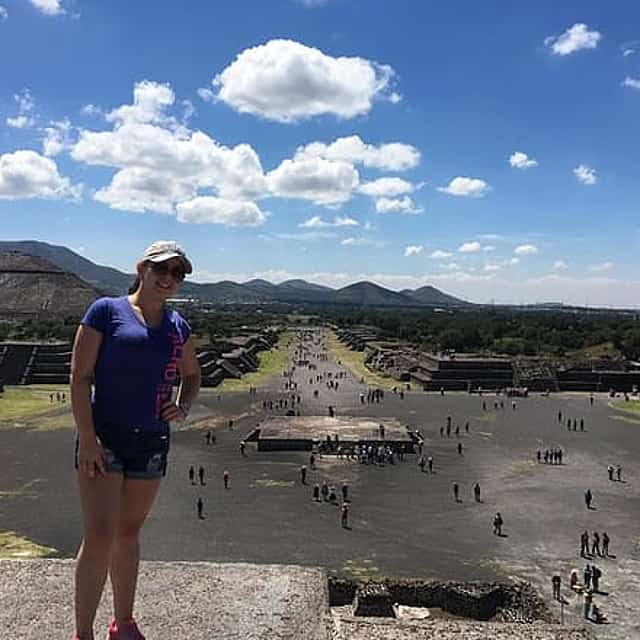
Ciudad de México, México
8 horas
A partir de€406.83/ persona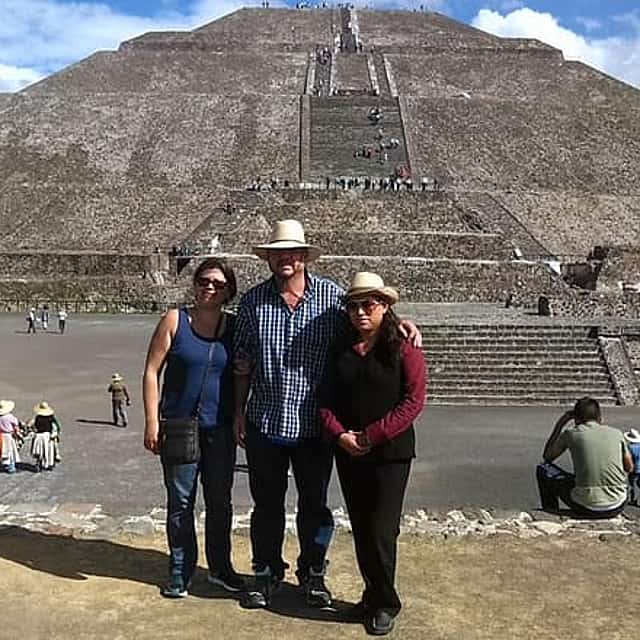
Ciudad de México, México
6 horas
A partir de€294.72/ persona
Ciudad de México, México
5 h 30 min
A partir de€298.34/ persona
Ciudad de México, México
7 horas
A partir de€316.42/ persona
Ciudad de México, México
4 horas
A partir de€334.50/ personaA partir de€343.54 / grupo