


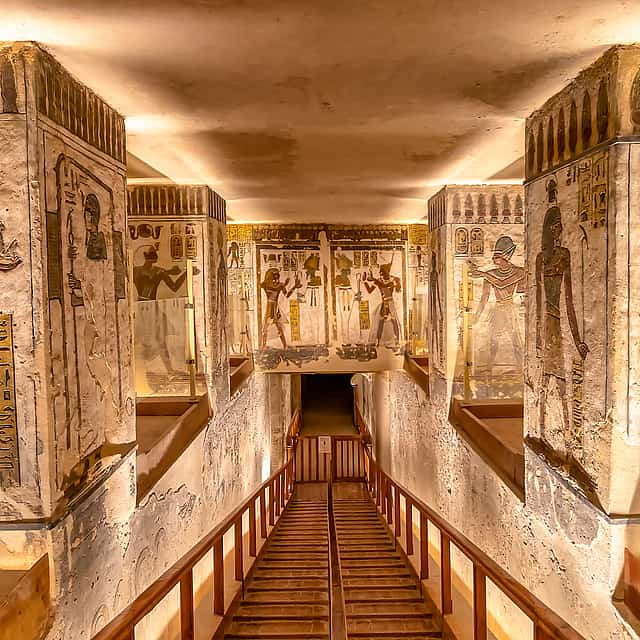
Vallée des Rois, Louxor, Égypte
Visite de la Vallée des Rois depuis Louxor
2 heures
18 vues récemment
À partir de€35.00/ personne2 Days Luxor Tour Discover of the West Bank
Politique d'annulation
Consultez les conditions du prestataire ci-dessous avant de réserver.
Durée 2 jours
Durée communiquée par le prestataire de l'expérience.
Langues
anglais, espagnol, arabe
Taille du groupe
De 1 à 15 voyageurs
LUXOR DAY TRIP TO WEST BANK VISIT VALLEY KINGS MEMNON COLOSSI & HATSHEPSUT TEMPLE
Pickup from your hotel in Luxor by tour guide to start your tour
The Valley of the Kings (Egyptian Arabic: وادى الملوك Wādī el-Mulūk; Coptic: ϫⲏⲙⲉ[1] Džēme [ˈʃɪ.mæ]), also known as the Valley of the Gates of the Kings (وادى ابواب الملوك Wādī Ebwāb el-Mulūk),[2] is an area in Egypt where, for a period of nearly 500 years from the Eighteenth Dynasty to the Twentieth Dynasty, rock-cut tombs were excavated for pharaohs and powerful nobles under the New Kingdom of ancient Egypt
The Colossi of Memnon (Arabic: el-Colossat or es-Salamat) are two massive stone statues of the Pharaoh Amenhotep III, which stand at the front of the ruined Mortuary Temple of Amenhotep III, the largest temple in the Theban Necropolis. They have stood since 1350 BC, and were well known to ancient Greeks and Romans, as well as early modern travelers and Egyptologists.[1][2] The statues contain 107 Roman-era inscriptions in Greek and Latin, dated to between AD 20 and 250; many of these inscriptions on the northernmost statue make reference to the Greek mythological king Memnon, whom the statue was then – erroneously – thought to represent.
The mortuary temple of Hatshepsut (Egyptian: Ḏsr-ḏsrw meaning "Holy of Holies") is a mortuary temple built during the reign of Pharaoh Hatshepsut of the Eighteenth Dynasty of Egypt.[b] Located opposite the city of Luxor, it is considered to be a masterpiece of ancient architecture.[c] Its three massive terraces rise above the desert floor and into the cliffs of Deir el-Bahari. Her tomb, KV20, lies inside the same massif capped by El Qurn, a pyramid for her mortuary complex. At the edge of the desert, 1 km (0.62 mi) east, connected to the complex by a causeway lies the accompanying valley temple. Across the river Nile, whole structure points towards the monumental Eighth Pylon
after the tour is finished you will be transferred back to your Hotel.
LUXOR EXCURSIONS VISIT HABU TEMPLE VALLEY OF WORKERS & QUEENS
Pickup from your hotel in Luxor by tour guide to start your tour
Medinet Habu (Arabic: مدينة هابو; Ancient Egyptian: ḏꜣmwt; Sahidic Coptic: (ⲧ)ϫⲏⲙⲉ, ϫⲏⲙⲏ, ϫⲉⲙⲉ, ϫⲉⲙⲏ, ϫⲏⲙⲓ; Bohairic Coptic: ϭⲏⲙⲓ)[1] is an archaeological locality situated near the foot of the Theban Hills on the West Bank of the River Nile opposite the modern city of Luxor, Egypt. Although other structures are located within the area and important discoveries have also been made at these sites, the location is today associated almost synonymously with the largest and best preserved site, the Mortuary Temple of Ramesses III.
Deir el-Medina (Egyptian Arabic: دير المدينة), or Dayr al-Madīnah, is an ancient Egyptian workmen's village which was home to the artisans who worked on the tombs in the Valley of the Kings during the 18th to 20th Dynasties of the New Kingdom of Egypt (ca. 1550–1080 BCE)[1] The settlement's ancient name was Set maat ("Place of Truth"), and the workmen who lived there were called "Servants in the Place of Truth".[2] During the Christian era, the temple of Hathor was converted into a Monastery of Saint Isidorus the Martyr (Coptic: ⲡⲧⲟⲡⲟⲥ ⲙ̄ⲫⲁⲅⲓⲟⲥ ⲁⲡⲁ ⲓⲥⲓⲇⲱⲣⲟⲥ ⲡⲙⲁⲣⲧⲉⲣⲟⲥ)[3] from which the Egyptian Arabic name Deir el-Medina ("Monastery of the City") is derived.
The Valley of the Queens consists of the main wadi, which contains most of the tombs, along with the Valley of Prince Ahmose, the Valley of the Rope, the Valley of the Three Pits, and the Valley of the Dolmen. The main wadi contains 91 tombs and the subsidiary valleys add another 19 tombs. The burials in the subsidiary valleys all date to the 18th Dynasty
after the tour is finished you will be transferred back to your Hotel.
Luxor International Hospital Street, luxor, 1351201
Accessibility Not wheelchair accessible Near public transportation Infant seats available Entrance fees -Depending on the Tour Options Chosen
Verified Local Host
Sur GetExperience depuis 2026
Vallée des Rois, Louxor, Égypte
2 heures
18 vues récemment
À partir de€35.00/ personne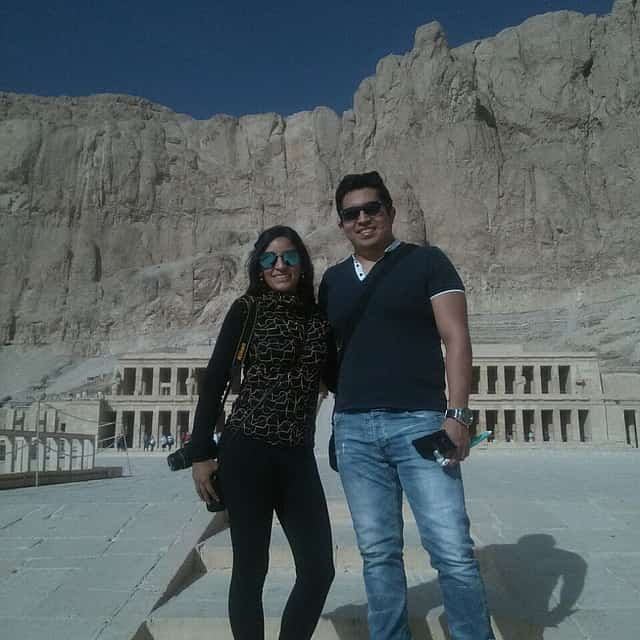
Vallée des Rois, Louxor, Égypte
5 heures
29 vues récemment
À partir de€40.00/ personne
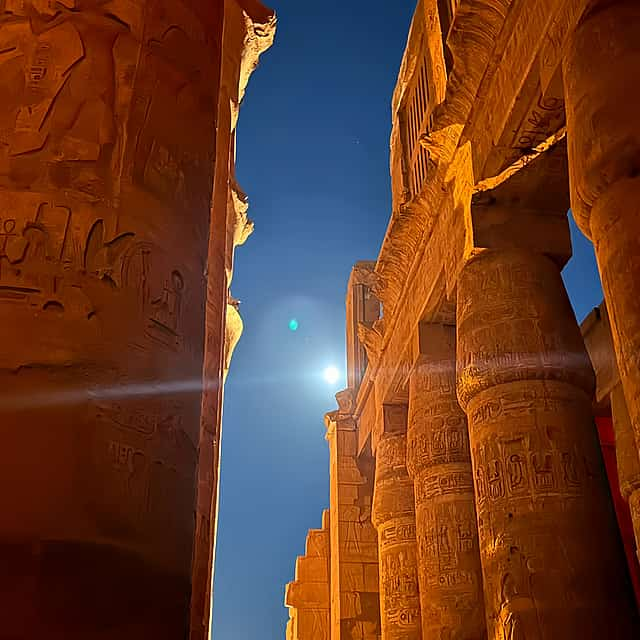
Temple de Karnak, Louxor, Égypte
1 heure
18 vues récemment
À partir de€40.00/ personne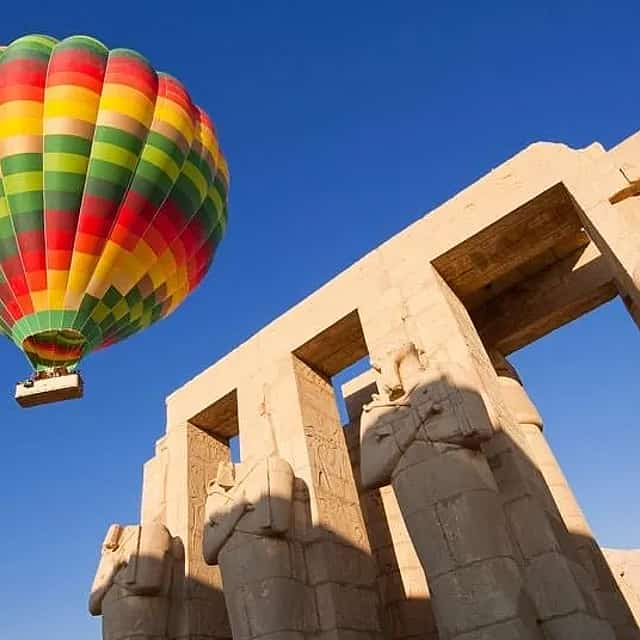
Ballons à air chaud Louxor, Louxor, Égypte
3 heures
23 vues récemment
À partir de€81.53/ personne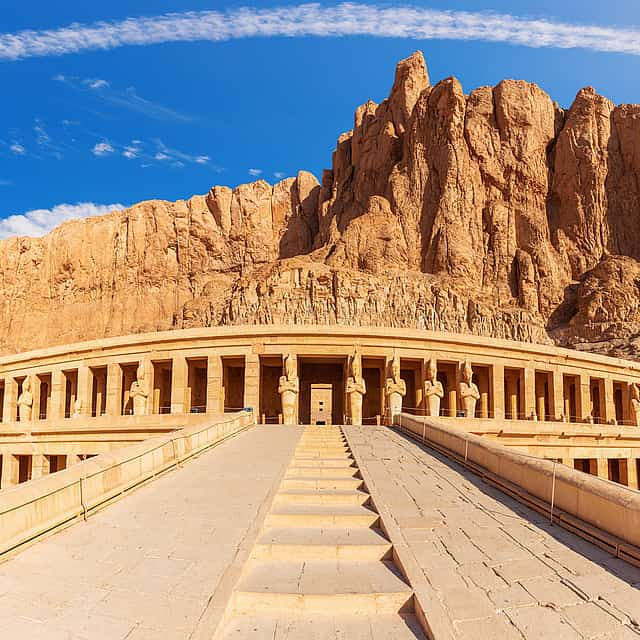
Temple d'Hatchepsout, Louxor, Égypte
2 heures
16 vues récemment
À partir de€55.00/ personne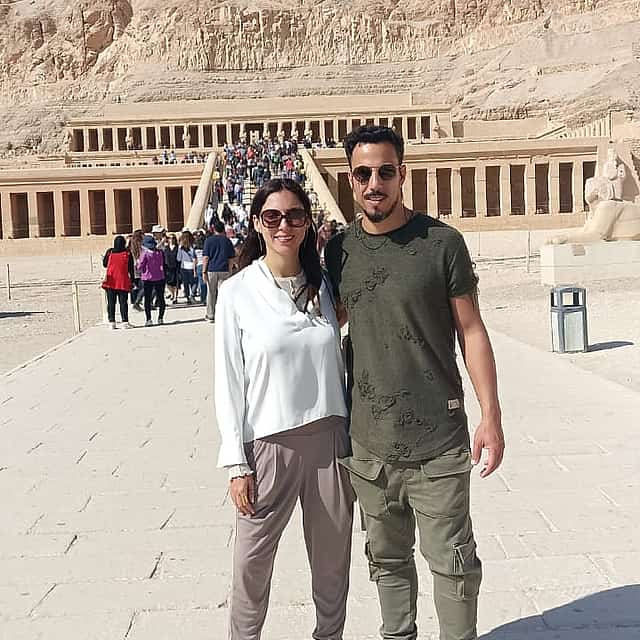
Louxor, Égypte
8 heures
22 vues récemment
À partir de€50.00/ personne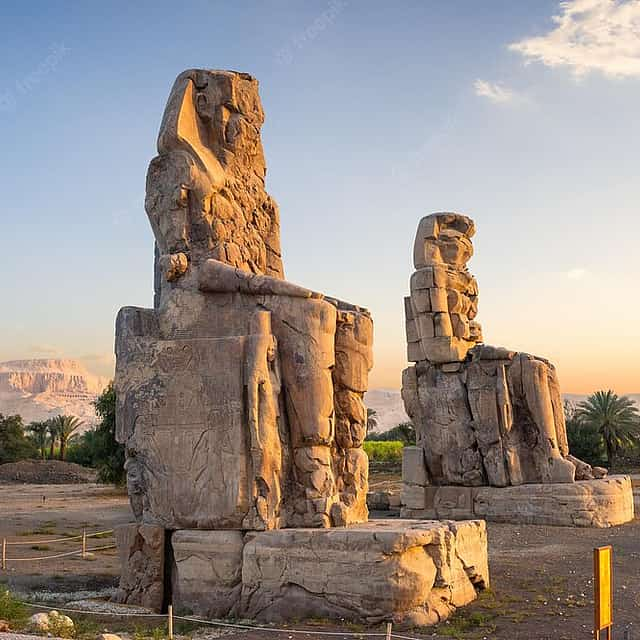
Louxor, Égypte
1 heure
14 vues récemment
À partir de€55.00/ personne
Louxor, Égypte
1 heure
15 vues récemment
À partir de€58.89/ personne
Louxor, Égypte
4 heures
15 vues récemment
À partir de€72.29/ personne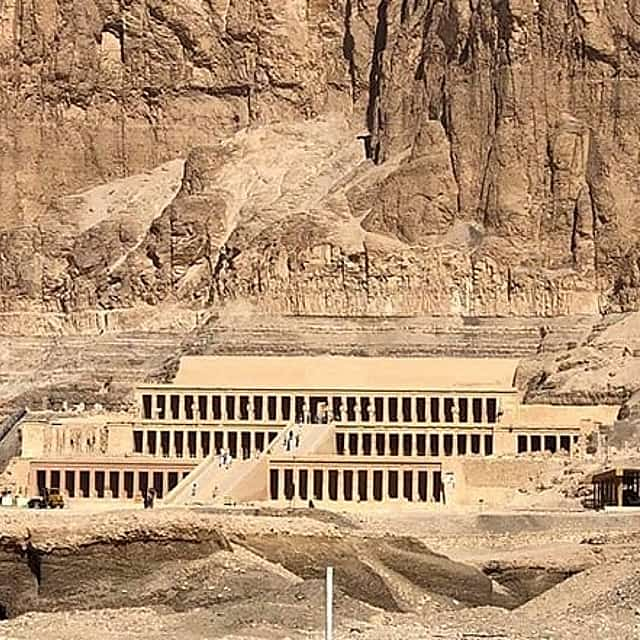
Louxor, Égypte
8 heures
24 vues récemment
À partir de€58.89/ personne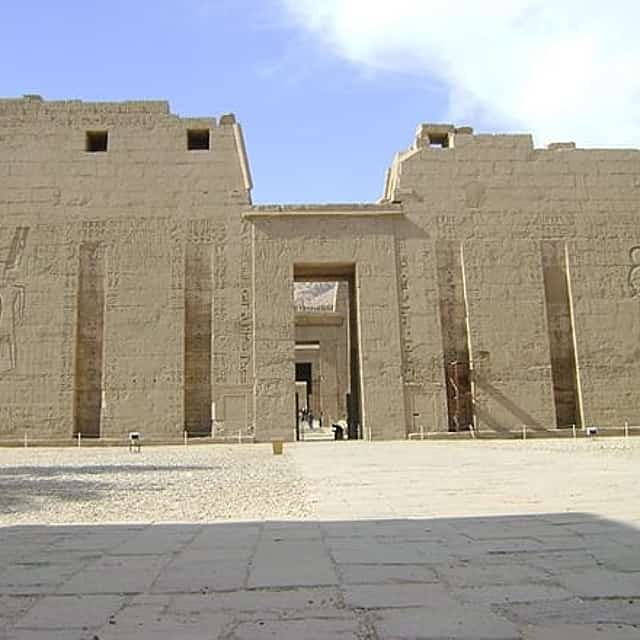
Louxor, Égypte
6 heures
15 vues récemment
À partir de€81.53/ personneÀ partir de€54.36 / groupe