Μπολόνια., Μπολόνια, Ιταλία
Bologna Scavenger Hunt & Highlights Self-Guided Walking Tour
2 ώρες
Από€6.99/ άτομοA scream echoes through the porticoes... can you crack the case?It is 1880. Giacomo di Pepoli, head of a powerful family, has been found dead. The police are…
Πολιτική ακύρωσης
Διαβάστε την πολιτική του παρόχου παρακάτω πριν κάνετε κράτηση.
Διάρκεια 1 ώρα
Η διάρκεια δηλώνεται από τον πάροχο της εμπειρίας.
Γλώσσα
Αγγλικά
Μέγεθος ομάδας
1–15 ταξιδιώτες
Porta Galliera was a gate or portal of the former outer medieval walls of the city of Bologna, Italy. It is the most ornamented of all the remaining gates. The gate was built during 1659-1661 by designs of the architect Bartolomeo Provaglia. Here you will have to look around to find the answer to our challenge to advance to the new location and learn the story of this place.
On Friday and Saturday, Piazza VIII Agosto hosts the traditional and large "Piazzola market", with over 400 street stalls. Here you will have to look around to find the answer to our challenge to advance to the new location and learn the story of this place.
The Arena del Sole is one of the historical theatres of Bologna. Its origins come to 1810. It was reopened in 1995 after eight years of reconstruction. Here you will have to look around to find the answer to our challenge to advance to the new location and learn the story of this place.
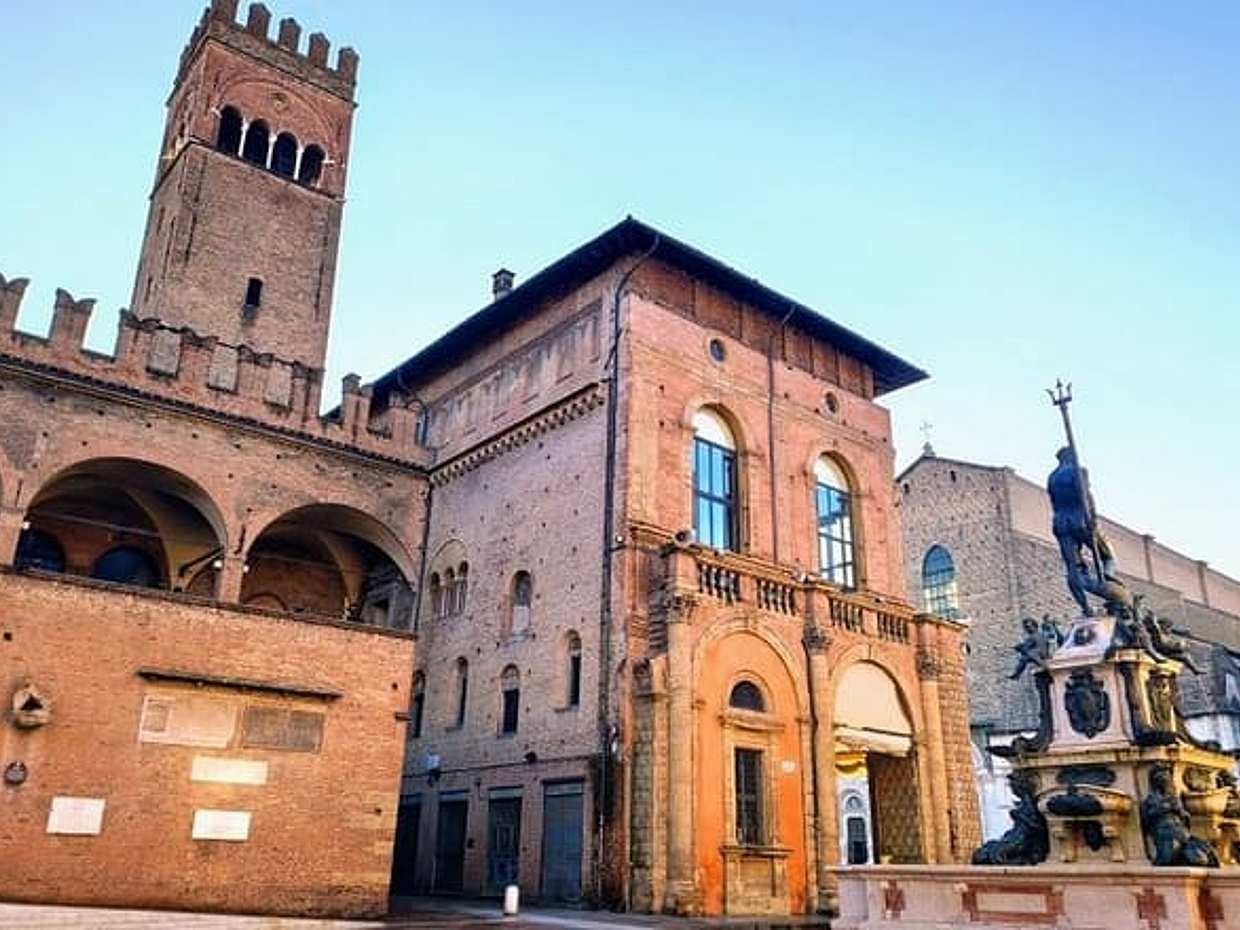
The fountain was completed in 1565. The over-life-size bronze figure of the god Neptune was completed and fixed in place around 1567. The statue was an early design by Giambologna, who had submitted a model for the Fountain of Neptune in Florence, but had lost the commission to Baccio Bandinelli. Here you will have to look around to find the answer to our challenge to advance to the new location and learn the story of this place.
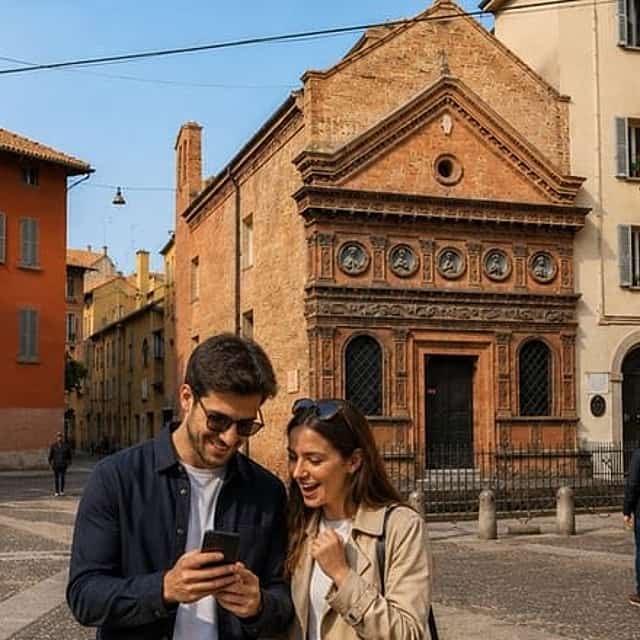
The oratory was built between 1481 and 1497, when the celestine fathers of the nearby church of San Giovanni Battista decided to build a small church, in an area below which was the structure of a door of the circle early medieval walls, where an ancient image of the Madonna was placed, protected by a simple tabernacle. Here you will have to look around to find the answer to our challenge to advance to the new location and learn the story of this place.
It dominates Piazza Maggiore. The basilica is dedicated to the patron saint of the city, Saint Petronius, who was the bishop of Bologna in the fifth century. Construction began in 1390 and its main facade has remained unfinished since. Here you will have to look around to find the answer to our challenge to advance to the new location and learn the story of this place.
The construction of the present Baroque church began in 1687-1690 under the designs of Giovanni Battista Bergonzoni, who built the elliptical plan with a dome designed by Giuseppe Tubertini, completed in 1787. The facade was not added till 1905. The sanctuary houses the sculptural group of Sorrow over Dead Christ (1463) by Niccolò dell'Arca. Here you will have to look around to find the answer to our challenge to advance to the new location and learn the story of this place.
The taller one is called the Asinelli while the smaller but more leaning tower is called the Garisenda. Their names derive from the families which are traditionally credited with having been constructed between 1109 and 1119. Here you will have to look around to find the answer to our challenge to advance to the new location and learn the story of this place.
The oldest university in Europe didn’t have a base until well into the renaissance, but before then, classes were held in professors’ homes (many lived around here) or in public spaces like this one. Here you will have to look around to find the answer to our challenge to advance to the new location and learn the story of this place.
The Park of Montagnola is a public park in Bologna, Italy; it owes the original construction (1805) to Napoleonic rule, who commissioned the park design from Giovanni Battista Martinetti.
Bologna Cathedral dedicated to Saint Peter is the cathedral of Bologna in Italy, and the seat and the metropolitan cathedral of the Archbishop of Bologna. Most of the present building dates from the 17th century, with a few parts from the late 16th century.
The building was begun at the end of February 1562, built very quickly, it was inaugurated on October 21, 1563. The building of the new "Schools" was named Archiginnasio after the classical term which was used to designate the Studium, as the University was first called, of Bologna.
Palazzo dei Banchi was the last building erected in Piazza Maggiore. Designed by Vignola in the 16th century, its spectacular façade was intended to hide the alleys of the rear market. Its name comes from the ancient presence of currency exchange “banks”
P.za XX Settembre, 15, 40121 Bologna BO, Italy
Not wheelchair accessibleInfants must not sit on lapsInfant seats unavailableTo unlock the experience in the Questo app, go to and add your booking number and e-mail address. Then, download the Questo app and create a new account with the e-mail address you used for unlocking.
Verified Local Host
Στο GetExperience από το 2026
Μπολόνια., Μπολόνια, Ιταλία
2 ώρες
Από€6.99/ άτομο
Μπολόνια., Μπολόνια, Ιταλία
1 ώρα
24 προβολές πρόσφατα
Από€15.00/ άτομο
Μπολόνια., Μπολόνια, Ιταλία
1 ώ 30 λ
12 προβολές πρόσφατα
Από€9.11/ άτομοΑπό€10.11 / ομάδα