


Things to do in Koblenz

City guide

Things to do in Koblenz

7 experiences Germany

Plan your trip to Koblenz

Koblenz stands where the Moselle runs into the Rhine. The Romans built a fort here over 2,000 years ago and named it Confluentes, the confluence. Things to do in Koblenz sit close together: the old town between the rivers, and a fortress across the Rhine.

The old town and the confluence

  • Deutsches Eck. The German Corner, the headland where the Moselle meets the Rhine, is named for the Teutonic Order, which settled here in 1216. A 37-metre monument to Emperor Wilhelm I was unveiled in 1897. Artillery wrecked the statue in 1945, and a replica went up in 1993.
  • St Castor. A church consecrated in 836, near the Deutsches Eck. Its fountain bears a French inscription of 1812 marking the Russian campaign. A Russian commandant added "seen and approved" on 1 January 1814.
  • Schängel fountain. A bronze boy in the town hall courtyard spits a jet of water every few minutes. Schängel, from the French Jean, is what Koblenzers call themselves.

Ehrenbreitstein and the cable car

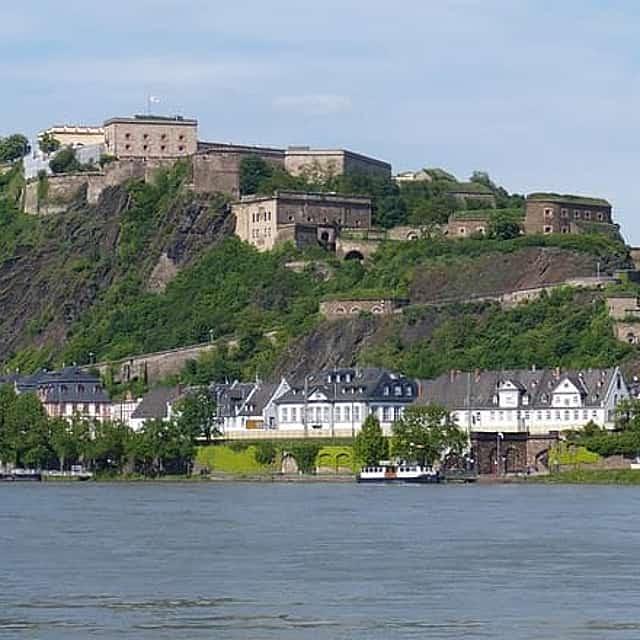
Ehrenbreitstein Fortress stands on a rock 118 metres above the Rhine. French troops blew up the old one in 1801, and Prussia built the present one. Museums fill part of it.

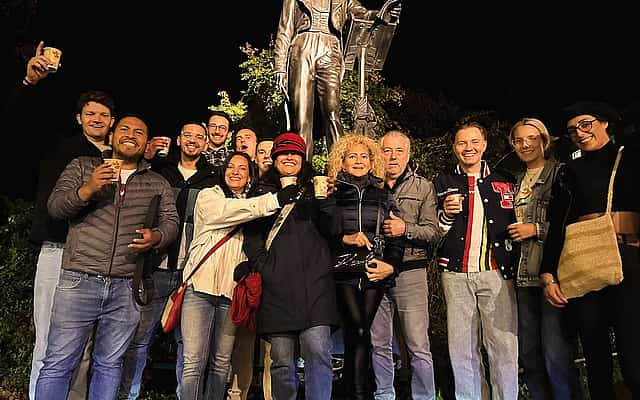
A cable car built for the 2011 Federal Garden Show climbs to it from the Rhine promenade by St Castor. Tours in Koblenz pair the ride with the Deutsches Eck, or walk the old town for about two hours. A scavenger hunt on your phone needs no guide.

Day trips from Koblenz

Tours out of town go by car.

  • Stolzenfels. A castle in a southern district of Koblenz, rebuilt in neo-Gothic style from 1836 for the Prussian crown prince.
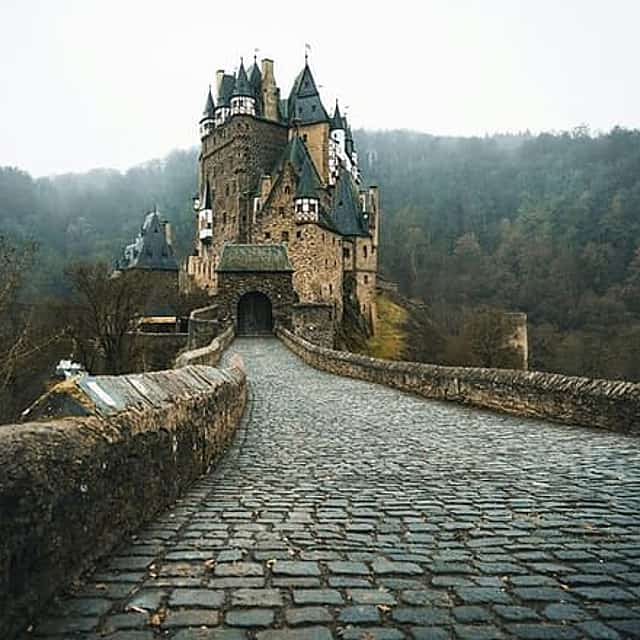
  • Eltz. A castle in the Eifel hills near the Moselle, in the hands of one family since the 12th century.
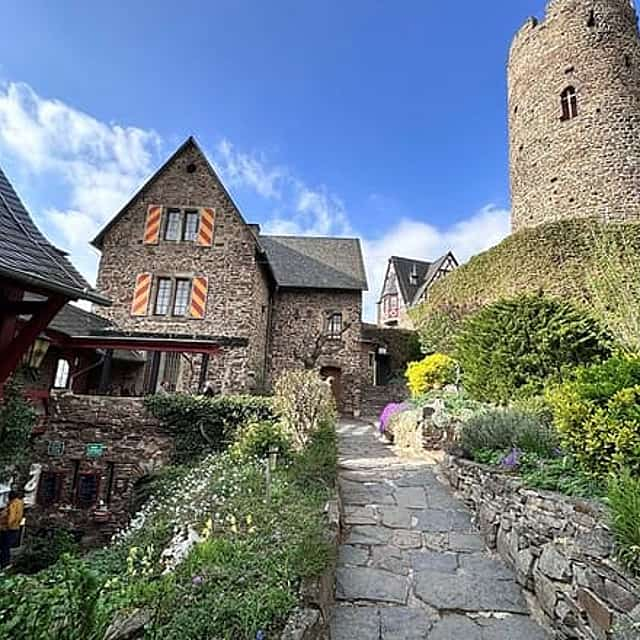
  • Thurant. A castle above the Moselle at Alken. The archbishops of Cologne and Trier took it in 1248 and ran it as two halves.
  • Middle Rhine. The Upper Middle Rhine Valley, a 65 km gorge between Koblenz and Bingen, has been on the UNESCO list since 2002.

Practical

  • Weather. Afternoons reach 25C in July and 5C in January. Nights fall to about 14C in July and 0C in January. Rain totals about 600 mm a year.
  • Getting around. The old town is walkable, and city buses cover the rest. Trains from the main station follow the Rhine to Boppard and Bingen and the Moselle to Cochem and Trier.
  • Castle seasons. Eltz opens from spring to early November, and Thurant from March to mid-November.
  • Wine. Riesling is the main grape on both the Moselle and the Middle Rhine.

Other cities in Germany

Top experiences in Koblenz

Can’t find the right experience?

Tell us what you are planning and local hosts will send options tailored to your dates, group and budget.