


3-Day ONE WAY Bus Tour to Hiroshima via SAN'IN from Fukuoka
Japan
It is a chartered bus trip of 2 night and 3 days from somewhere in Fukuoka prefecture to Hiroshima Station. Along the way, you can discover good old Japan that you do not know in the "San'in" region on the Sea of Japan side!
Annuleringsbeleid
Lees hieronder het beleid van de aanbieder voordat je boekt.
Duur 3 dagen
Duur opgegeven door de aanbieder van de ervaring.
Talen
Engels, Duits, Russisch, Italiaans, Frans, cn, Spaans, Thai, Turks
Groepsgrootte
1–50 reizigers
Volledige beschrijving
It is a chartered bus trip of 2 nights and 3 days from somewhere in Fukuoka prefecture to Hiroshima Station. Along the way, you can discover good old Japan that you do not know in the "San'in" region on the Sea of Japan side!
With this plan, you will aim for the world heritage Iwami Ginzan and Izumo Taisha through the Sea of Japan side while visiting the standard sights.
There are hot springs and fresh seafood from the Sea of Japan along the way.
By all means, please enjoy blowfish at Shimonoseki, "Matsuba crab" at Sakaiminato, "Shijimi" at Lake Shinji, and "Okonomiyaki" at the destination Hiroshima.
Our bus will give you a comfortable ride throughout the tour.
You don't have to navigate your way using public transportation.
We are very familiar with the area and our private bus will help you save time and visit as many places.
* We support the "Western Golden Route" policy being promoted by Fukuoka City.
With this plan, you will aim for the world heritage Iwami Ginzan and Izumo Taisha through the Sea of Japan side while visiting the standard sights.
There are hot springs and fresh seafood from the Sea of Japan along the way.
By all means, please enjoy blowfish at Shimonoseki, "Matsuba crab" at Sakaiminato, "Shijimi" at Lake Shinji, and "Okonomiyaki" at the destination Hiroshima.
Our bus will give you a comfortable ride throughout the tour.
You don't have to navigate your way using public transportation.
We are very familiar with the area and our private bus will help you save time and visit as many places.
* We support the "Western Golden Route" policy being promoted by Fukuoka City.
Route
08:00 < PICK UP > Your hotel or HATAKA Staion, HAKATA Port, KOKURA Station, KITA-KYUSHU Airport in Fukuoka. At the airport, a driver with a name board will meet you at the arrival gate and guide you to the bus parking lot.If you can apply, please let us know your [arrival flight number] in advance.
09:30-09:45 < historic sites > Dannoura Battlefield, 21 Mimosusogawa- cho, Shimonoseki, Yamaguchi. Shimonoseki City in Yamaguchi prefecture is famous as the place of the Battle of Dan-no-Ura, known as the last battle between Minamoto and Taira clans. At first, the battle was dominated by the Taira but after the flow of the tide changed, the Minamoto began to dominate. Finally, the Minamoto won the battle and the Kamakura era had begun in Japan.Today, it is called Mimosuso River Park, a city park from where you can get a great view of the Kanmon strait. There is a monument of the Dan-no-Ura Old battlefield site and some great information displays to learn about the battle. There are some handprints by some famous actors who played roles in “Yoshitsune”, the NHK TV drama which was broadcast in 2005.Some chosyu cannons which are replicas are exhibited in the park. Chosyu is a former name of Yamaguchi prefecture a long time ago. The real cannons were used the the Battle of Shimonoseki between Chosyu and 4 other countries such as Britain and France in 1863. Shimonoseki has been a very important city throughout Japanese history and Yamaguchi prefecture, called Chosyu, was one of the strongest areas in the past.There is also a shrine called Akama Jingu near the park. It is dedicated to Emperor Antoku who drowned in the ocean during the Battle of Dan-no-Ura. The shrine looks like a Ryugu castle, taken from an old Japanese fairytale. It is fantastic and worth a visit if you go to Shimonoseki city.Hagi city is also a famous place for sightseeing. There is Hagi castle downtown which is registered as a part of the World Cultural Heritage. You can see the buildings of old Japanese style such as the “Kikuya Family residence” and the “birthplace of Takasugi Shinsaku”. If you like history and traditional architecture, I also recommend to go there!
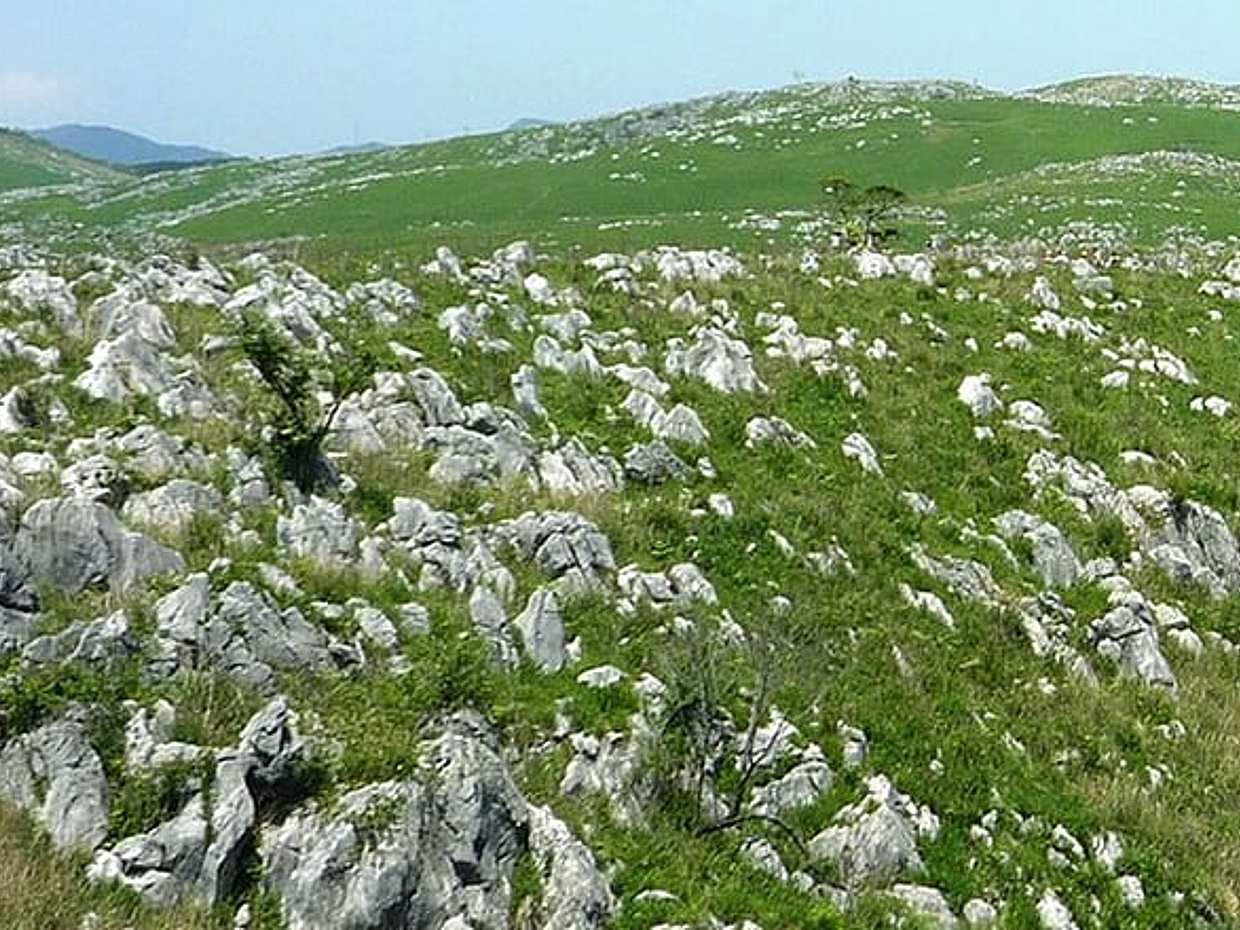
10:45-11:15 < National Park > Akiyoshidai, 11237-862 Shuhocho Akiyoshi, Mine, Yamaguchi. Akiyoshidai is the largest karst plateau in Japan, spread in the middle and eastern part of Mine City.It was designated as a National Monument (Akiyoshidai Quasi-National Park) in 1955 and a special natural monument in 1964.The limestone that makes up the magnificent landscape of Akiyoshidai is about 350 million years ago in the southern sea.It was born as a coral reef, and over the years has formed a karst plateau like today. https://akiyoshidai-park.com/en/enjoy/
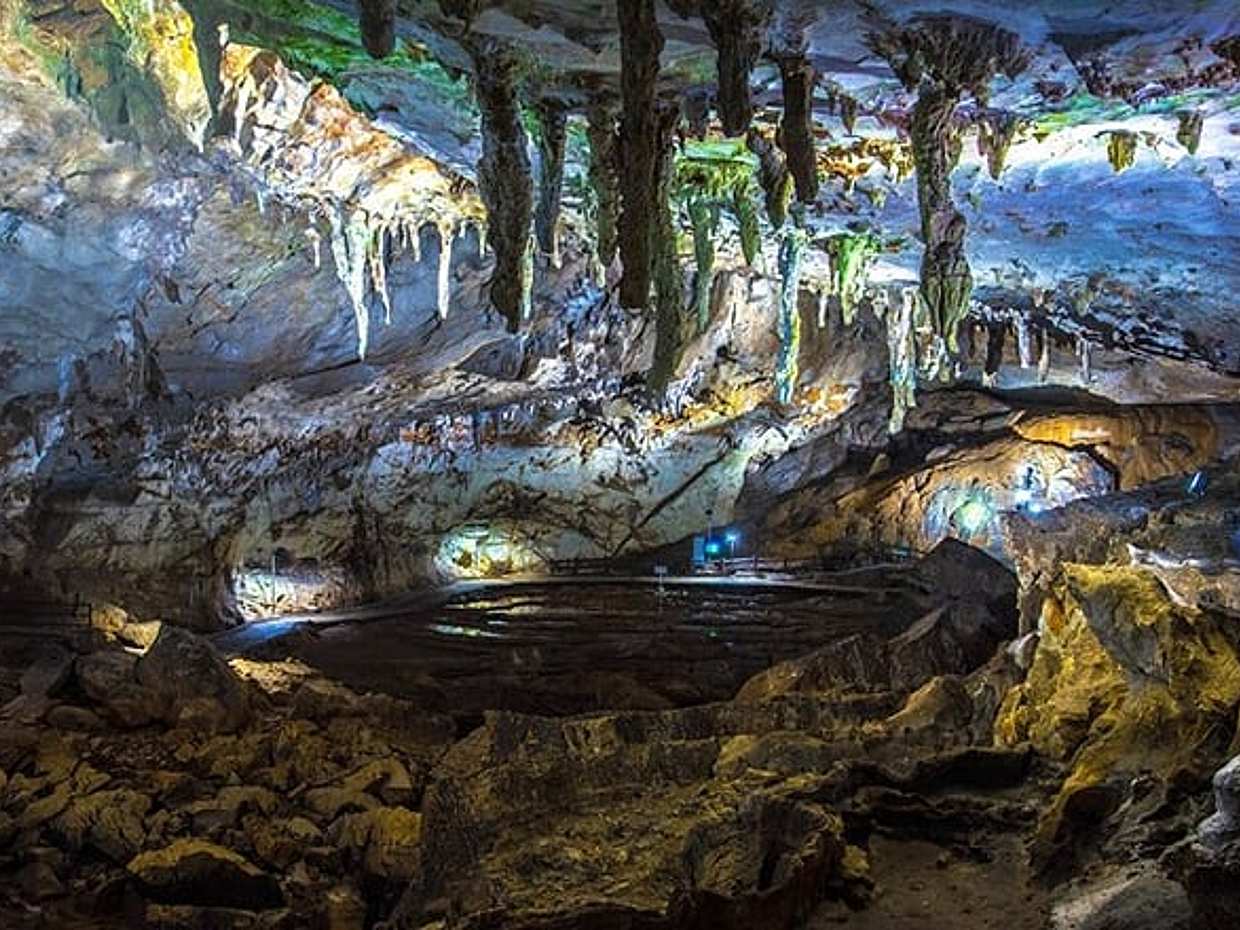
11:30-12:15 < adventure! > Akiyoshido Cave [ KUROTANI ] Entrance, 1237-739 Shuhocho Akiyoshi, Mine, Yamaguchi. *Entrance fee¥1300 (≒10 USD)/adult< re-Pick Up > AKIYOSHI-DO Cave [ Main Entrance ] ~ < lunch 1 > Restaurant "YASUTOMIYA"*The cave runs from north to south. You can enter through the entrance and exit on the other side "one way". The bus will drop you off at the entrance and wait for you at the exit.Akiyoshido is one of the largest limestone caves in Japan, which opens at the southern foot of the Akiyoshidai Quasi-National Park 100 meters underground.Passing through the chilly cedar grove that cools the skin, you will find the entrance to Akiyoshido. The sightseeing course in the cave is about 1 km (the total length exceeds 10.7 km and is the second largest in Japan), the temperature is constant at 17 ° C throughout the seasons, the summer is cool and the winter is warm, and you can enjoy sightseeing comfortably. The mysterious forms of nature, as if the time has frozen, are so varied that they can inspire our hearts.
13:00-14:45 < lunch 1 > Restaurant "Choshuen", 1-6 Kimachi, Yamaguchi ~ < guided park > Rurikoji Temple, 7-1 Kozancho, Yamaguchi. This pagoda was commissioned by Ouchi Morimi, one of the heads of the Ouchi clan that ruled Yamaguchi from the 14th to 16th centuries. Morimi had the pagoda built as a memorial to his older brother Ouchi Yoshihiro, who died leading a revolt against the country’s central government in 1399. The pagoda was completed in 1442 and is lauded as the most outstanding structure surviving from the middle of the Muromachi period, which ran from approximately 1336 to 1573. It is designated a national treasure.The pagoda is 31 meters tall, or about 102 feet. Its roofs are made of multiple layers of cypress bark held in place with bamboo nails. Moving upward, each story is progressively narrower, contributing to the structure’s balanced appearance. Except for a railing running around the second story, the pagoda has very little adornment for Muromachi period architecture.When the pagoda was built here, it was originally within in the precincts of Koshakuji Temple. But Koshakuji Temple was relocated to the city of Hagi in the early 17th century, and Rurikoji Temple later took its place. This is why the pagoda is now known as Rurikoji Temple Five-Storied Pagoda. It is counted among the top three pagodas in Japan, alongside Daigoji Temple pagoda in Kyoto and Horyuji Temple pagoda in Nara.
15:45-17:00 < guided walk > "World Heritage Route" ~ < bus wating > Hagimeirin Center Parking Lot, 560-4 Emukai, Hagi, Yamaguchi. Part of the UNESCO World Heritage “Sites of Japan’s Meiji Industrial Revolution.”The merchant district of Hagi is located east of the high-ranking samurai district and Hagi Castle.Its maze of white-walled streets is lined with well-preserved merchant houses and natsumikan trees stick out over many of the walls. The white walls protect the natsumikan citrus trees from the sea wind and the image of natsumikan hanging over the earthen walls has been a symbol of Hagi since the turn of the twentieth century.The merchant district was centered on Onarimichi, the main road used by the Mōri daimyo, lords of Chōshū domain, when they traveled to Edo (now Tokyo) to wait upon the shogun as part of the alternate attendance (sankin kōtai) system. The Onarimichi runs east from the castle through the town until turning south at the Karahi Fudaba Noticeboard. The merchant district straddles the road between the signboard in the east and the main gate into the samurai district in the west.Like many merchants of the Edo period (1603–1867), merchants in Hagi grew wealthy during the centuries of peace under the Tokugawa shogunate. The wealth of Hagi’s merchants can be seen in the walls of the city. The black tile and white plaster of the earthen walls was a symbol of prestige and wealth. These walls, with their distinctive crisscross pattern of tile and plaster, are called namako-kabe, or “sea-cucumber walls.”Many of the side streets leading from Onarimichi are named after the prosperous merchants who lived on them. For example, Iseya Yokochō was named for the wealthy Iseya family, and Edoya Yokochō was named for the Edoya merchants. Edoya Yokochō still has a number of Edo-period buildings, including the Former Kido Takayoshi Residence and the Former Aoki Shūsuke Residence, which have both been preserved by the city and are open to the public. The Kikuya Family Residence is also open to the public as a museum run by the Kikuya family.Together, the merchant and samurai districts make up the area known as Hagi Castle Town, which is part of the UNESCO World Heritage “Sites of Japan's Meiji Industrial Revolution.”(This English-language text was created by the Japan Tourism Agency. )
17:15-17:30 < Yoshida Shoin > Shoin Shrine, 1537 Chinto, Hagi, Yamaguchi. The Shinto shrine dedicated to Yoshida Shōin, who became the driving force behind the Meiji RestorationShoin Shrine is located on the former lands of the Sugi family on the outskirts of Hagi. Yoshida Shoin (born Sugi Toranosuke in 1830) grew up here and taught here periodically until his execution in 1859.The school where Shoin taught, Shokasonjuku, was restored in 1890, and a small private memorial was erected nearby. Seventeen years later in 1907, two of his most famous students, four-time prime minister Ito Hirobumi (1841–1909) and the diplomat and bureaucrat Nomura Yasushi (1842–1909), built Shoin Shrine behind their former school as a monument to their teacher.From 1936 to 1940, donations arrived from all over Japan for the construction of a brand-new shrine located at the rear of the property. Although work lapsed during World War II, the new copper-roofed shrine was completed in 1955. The roof was replaced in 2007 on the 100th anniversary of the shrine’s founding. The original shrine building is now called Shomon Shrine and is still maintained on the property as a shrine for Shoin’s students.As the shrine complex has expanded, it has come to encompass several historical buildings from the Edo period, including two museums and countless landmarks to the life of Yoshida Shoin and other Meiji revolutionaries.Approaching Shoin Shrine from the street, a large stone memorial is visible to your left. This is a monument to the 1862 meeting of three Meiji revolutionaries—Tagami Toshichi (dates unknown) of Satsuma, now Kagoshima Prefecture, Sakamoto Ryoma (1836–1867) of Tosa, now Kochi Prefecture, and Kusaka Genzui (1840–1864) of Choshu, now Yamaguchi Prefecture. Their meeting took place at an inn that once stood on this site.After passing through the shrine’s first torii gate, to the immediate left is another large stone memorial commemorating the 100th anniversary of the beginning of the Meiji period, erected in 1968 and inscribed with words written by Sato Eisaku (1901–1975), Japan’s then-prime minister, recipient of the 1974 Nobel Peace Prize, and a native of Yamaguchi Prefecture.Farther down the path is a large stone inscribed with a poem Yoshida Shoin wrote to his parents shortly before his execution in 1859.In the center of Shoin Shrine is the Shokasonjuku Academy and the old residence of the Sugi family. The Academy is listed as a National Historic Site and is on the UNESCO World Heritage List as one of the “Sites of Japan’s Meiji Industrial Revolution.” The Sugi residence which lies behind it is an excellent example of a lower-ranking samurai home from the Edo period. In the Shiseikan building nearby displays many artifacts connected to Yoshida Shoin.(This English-language text was created by the Japan Tourism Agency. )
[ Day-1 DROP OFF ] 17:45 < guest inn > e.g.) RYOKAN Hagi Komachi, Hagi, Yamaguchi. * Hotels you book in Hagi City, Yamaguchi Prefecture* Your hotel arrangements and payments must be made by yourself.https://travel.rakuten.com/The next day we will leave at 7:30am. The driver will pick you up at your hotel.
[ Day-2 PICK UP ] 07:30am < guest inn > e.g.) RYOKAN Hagi Komachi, Hagi, Yamaguchi. The driver will pick you up at your hotel.*You have to leave the hotel at 7:30 in the morning to make it in time for the optional tour of the World Heritage site Iwami Ginzan Silver Mine at 13:00, but if you're not interested in that, you can take your time and leave the morning for about an hour. It's up to you.
09:00-09:45 < guided walk > Tonomachi Street, Ushiroda, Tsuwano, Kanoashi, Shimane. Tsuwano, which is also known as “Little Kyoto,” is a castle that resembles a hidden village in a quiet valley. In the area around Tonomachi Street in particular, the oldest features of the still remain, and schools of countless carp of various sizes swim in the canal on the street, which is lined with white plaster-walled buildings. The season when the white and purple Japanese irises are in bloom is especially beautiful, with the area seeming to transform into an elegant painting. Tonomachi Street is the symbol of Tsuwano – there are a large number of historic sites gathered in the area, including a Catholic church, the site of the former school and the remnants of samurai residences. Furthermore, you will also find stores and stylish cafes selling local cuisine in the vicinity, as well as stores selling general merchandise and souvenirs. If you venture a little way down the lanes you will discover the white-walled earthen storehouses of merchants that are preserved as they were long ago, and you can capture a sense of the calm lifestyle of an old castle. There are also a large number of spots with connections to well-known figures whom the fostered, such as literary master Ogai Mori, philosopher Amane Nishi and artist Mitsumasa Anno.
11:45-12:30 < lunch 2 > Roadside Station Sanpiko Gotsu, 995-1 Ushirojicho, Gotsu, Shimane. *You would like to adjust my time at this location so that I can make it in time for the start of the optional tour of the World Heritage Site, Iwami Ginzan, at 1:00 p.m.
13:00-16:15 < OPTIONAL TOUR > Iwami Ginzan World Heritage Center, Omoricho 1597, Oda, Shimane or < guided walk > YUNOTSU ONSEN Town. - Fridays, Saturdays, Sundays and public holidays from March to November- 13:45-15:45- Fee¥4500(≒30-40 USD)/adluthttps://iwami.urkt.in/ja/direct/offices/2326/coursesStarting with its discovery in 1526, the Iwami Ginzan Silver Mine was one of the world’s most prominent silver mines for 400 years. During the Age of Exploration it was known as “The Silver Mine” to Europeans and at its peak was responsible for a majority of Japan’s silver production which made up one-third of the world’s silver output. It became a UNESCO World Heritage Site in 2007, the first such mine to be registered in Asia. It was praised especially for coexisting peacefully with the surrounding nature. The site also includes the surrounding transportation routes, ports,s, and hot springs.[ Alternatives ]*If that doesn't interest you, you can also explore the nearby popular "Yunotsu Onsen" town. It's up to you.Yunotsu Hot Spring constitutes one part of the Iwami Ginzan Silver Mine and its Cultural Landscape World Heritage Site. The hot spring district has a history of thriving as a shipping port in ancient times. The well-known hot springs, which gush forth abundantly, once soothed the silver mine’s workers. The district is lined with buildings from various eras, starting from around the 19th century, and people continue to live in the area even today. It genuinely resembles a museum where time has stopped. It is the only hot spring district in Japan to be designated a Historic Streetscape Preservation District. Yunotsu is a hot spring paradise where you can nourish your mind and body while experiencing its charm and history.
17:30-17:45 < view spot > San'in Highway Lake SHINJI Serivice Area, Matsue, Shimane. You can try the local specialty, Shijimi Shiru (Clam Soup) here.Lake Shinji spreads out to the west of Matsue City, the “City of Water.” The view of the lake at sunset is particularly spectacular, and it has been selected as one of Japan’s 100 famous landscapes. In addition to water leisure sports such as yachting and canoeing, in winter, it is also possible to enjoy birdwatching at the lake. Because it is a brackish lake that contains some seawater, it is rich in fish and shellfish. Japanese sea bass, sand shrimp, eels, cattle egrets, freshwater clams, carp, and icefish are referred to as the “seven delicacies of Lake Shinji,” and are the tastes that represents Shimane Prefecture. In particular, the lake is one of Japan’s largest sources of Japanese basket clams, which are also popular as souvenirs. It is a fantastic feeling to jog or run on a clear morning while taking in Lake Shinji. After refreshing your mind and body, enjoying the Matsue Shinjiko Hot Spring area along the shore of the lake is a good way to start the first day of a wonderful journey.
18:30-20:00 < dinner 2 > *recommended: Ajidokoro "Misa", 6 Kyomachi, Sakaiminato, Tottori. *open17:30-23:00*close:Sundayhttps://tabelog.com/en/tottori/A3103/A310301/31000321/*If you book a ryokan with dinner included, you won't need to worry about dinner pick-up outside.
[ Day-2 DROP OFF ] 20:45 < guest hotel 2 > "KAIKE ONSEN", Yonago, Tottori. e.g.) Bayside Square Kaike Hotel, 4-21-1 Kaikeonsen, Yonago, Tottorihttps://kaikehotel.com/Gaze at Mt Daisen, the Chuugoku Region’s highest peak, from along the lovely seaside dotted with pine trees. The warm, salty waters rich in sodium and calcium chloride, well up under the ocean here at San’in’s largest hot spring area. Kaike Onsen enjoys a most convenient location for trips to Tottori and Shimane—right smack in the middle of San’in. Feel free to make it your headquarters for touring the whole area.Right in the center of San’in, Kaike Onsen is the spot from which to tour the area.http://www.kaike-onsen.com/road.htmlType Sodium and calcium chloride springs, average temp. 66.5 degrees. Effective against Nerve pain, skin conditions and anaemia.
[ Day-3 PICK UP ] 08:30 < guest hotel 2 > "KAIKE ONSEN" e.g.) Bayside Square Kaike Hotel, 4-21-1 Kaikeonsen, Yonago, Tottori
09:00-09:45 < guided walk > Mizuki Shigeru Road Bus Parking Lot, 28-3 Matsugaecho, Sakaiminato, Tottori. *Entrance fee of MIZUKI SHIGERU Museum¥700(≒5 USD)/adult*open 09:30-17:00https://www.tottori-tour.jp/en/sightseeing/837/Home town of the manga artist of its namesake, Sakaiminato’s Mizuki Shigeru Road is a popular destination for children and adults alike. The road, extending from Sakaiminato Station into the city proper, is an 800-meter-long arcade with some 153 bronze statues of Mizuki’s fantasy creatures on display, including details on each character. Stopping for a close look at each of these could take all day! A stroll along the road at night, when all the statues are lit up, is an altogether different delight. From the healing Kappa Spring, to the Yokai Jinja, a sort of fantasy shrine at which fortune slips can be drawn, to the Yokai Post, where mail with the ‘fairy postmark’ gets delivered, Mizuki Shigeru Road will surround you with bizarre creatures. To Make the Most of Mizuki Shigeru RoadOption 1: Rent a bicycleBicycles can be rented at the Sakaiminato Tourism Office, located inside the Minatosakai kouryuukan right next to Saikaminato Station. Sightseeing guides and pamphlets are also available.Option 2: Get your hands on a Yokai GuidebookCollect yokai stamps at the different facilities along Mizuki Shigeru Road, and exchange the stamps for various gifts available only at the Sakaiminato Tourism Office.Option 3: Learn more about the creaturesEach bronze statue is equipped with a bar code reader. Scan it with your mobile telephone to get more detailed information and become a ‘creature connoisseur’!Option 4: Rest on a creature bench!Mizuki Shigeru Road has tons of things to see. If you’re tired of walking or want to sit for a takeaway meal, plenty of benches are available along the road.Option 5: Get your picture taken with the creaturesYou’ll meet famous characters like Kitaro and Neko Musume along the road. Commemorate the experience with a photograph.Tons of Kitaro goods can only be bought at the shops on Mizuki Shigeru Road! The shops are full of eats like Kitaro bread and creature-shaped cakes. You might become a ‘creature connoisseur’ here too!http://www2.tottori-guide.jp/tourism/tour/view/566 Mizuki Shigeru MuseumFilming location for the 2010 Korean TV drama Athena: Goddess of War
10:45-11:45 < Japanese Art > Adachi Museum of Art, 320 Furukawacho, Yasugi, Shimane. *open 9:00- *Entrance fee¥2300(≒15-20 USD)/adulthttps://www.adachi-museum.or.jp/en/Conveying the harmonized beauty of Japanese paintings and Japanese Gardens is the aim and wish of Adachi Museum of Art, which is best known for having one of the greatest collections of modern to contemporary Japanese arts. Such works of art include numerous masterpieces by the great Japanese painter Yokoyama Taikan, ceramics and 165,000 square-metre Japanese gardens. This museum is listed as a three-star site in the Michelin Green Guide Japan while Adachi’s spectacular and immaculately maintained Japanese Garden have been ranked at No.1 in a row since 2003 by Sukiya Living Magazine : The Journal of Japanese Gardening. You can appreciate the splendid beauty of their gardens which show a different appearance as time / days / months / seasons change.
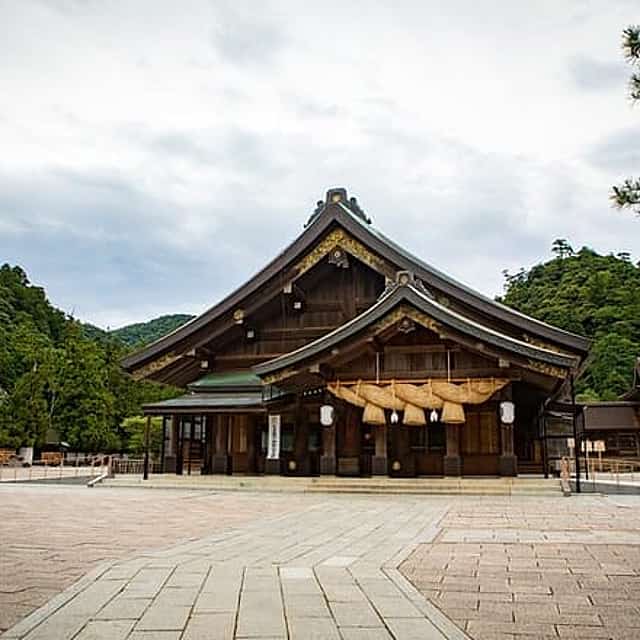
13:00-15:30 < lunch-3 and guided walk > Izumo Taisha, Taishacho Kizukihigashi, Izumo, Shimane. There are many shops along the approach to the shrine. The specialty is the three-tiered "Izumo Soba."Dedicated to the Shinto god of “en” (the ties that binds us together) Okuninushi-no-Okami, Izumo Taisha Grand Shrine is one of the oldest and most venerated shrines in Japan. The main hall is constructed in the “taisha-zukuri” style, Japan’s oldest form of shrine architecture, and has been designated as a National Treasure. Each year during the 10th month of the Lunar calendar the gods from throughout Japan congregate at Izumo Taisha for their annual meeting. Only in Izumo is this month known as “The Month With Gods.” The “shimenawa” (sacred straw rope) that hang at Kagura-den Hall in one of the largest in Japan, weighing an impressive 5 tons.
17:00-17:15 < regal break > Denko-Sekka Miyoshi Park, Shijikkanmachi, Miyoshi, Hiroshima. It's a long journey from Izumo to Hiroshima, so we'll take a break along the way.
18:45 < DROP OFF > Hiroshima Station [ Shinkansen ] ( North ) gate, 1 Matsubaracho, Minami Ward, Hiroshima. *On your way back, you can get off at Hiroshima Station or Miyajimaguchi Station, a World Heritage Site.https://travel.rakuten.com/From Hiroshima Station to Osaka, it takes about 2 hours by Sanyo Shinkansen.https://global.trafficinfo.westjr.co.jp/en/sanyo/It takes about an hour by train from Osaka to Kansai International Airport.https://www.kansai-airport.or.jp/en/
Wat is inbegrepen?
Inbegrepen
- Gids
- Transfer
- one 7m length Minibus ( 21 + 6 seats ) with one driver, an English speaking guide
- Toll and parking fees
- *Accommodation fees for our crews
Niet inbegrepen
- * Book for your hotels yourself: DAY1 at HAGI, Yamaguchi - DAY2 at "KAIKE-ONESEN", Yonago, Tottori
- Meals and drinks
- Entrance fee of Akiyoshido Cave: ¥1300(≒10 USD)/adult
- Entrance fee of < OPTIONAL TOUR > World Heritage Iwami Ginzan: ¥4500(≒30-40 USD)/adult
- Entrance fee of MIZUKI SHIGERU Museum: ¥700(≒5 USD)/adult
- Entrance fee of Adachi Museum of Art: 2300(≒15-20 USD)/adult
Belangrijke informatie
Ontmoetingspunt
Japan
Niet vergeten
Infants must not sit on lapsNot recommended for people with back problemsNot recommended for people with heart conditionsNot recommended for pregnant travelersNot suitable for petsWheelchair accessibleNot wheelchair accessibleA driver or guide will be waiting for you with your name board at your designated location and time. The side of our bus is written in Roman letters as our company name.. * Please note that if you are not there even after 1 hour or more at the place and time you specified, it will be canceled on the day. If you want to change the location or time, please be sure to contact us from this site.
Annuleringsbeleid
Free cancellation if cancelled more than 144 hours before start. 50% charge if cancelled within 144 hours of start. 100% charge if cancelled within 48 hours of start.
Je host
VE
Verified Local Host
Bij GetExperience sinds 2026
Dit vind je misschien ook leuk
Vanaf€3,527.36 / groep