


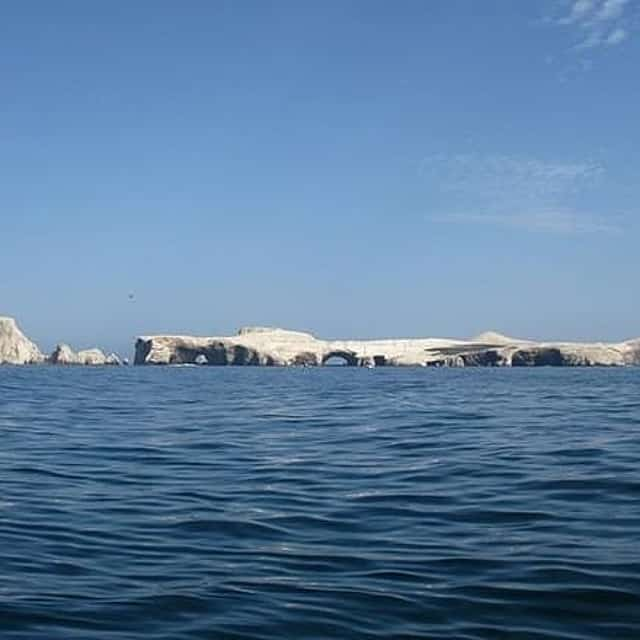
Sightseeing in Paracas is a desert coast seen from the water and the dunes. The national reserve was created on 25 September 1975 and covers 335,000 hectares, about two-thirds of it sea. Offshore, the Ballestas Islands, a trio called Norte, Centro and Sur, hold Humboldt penguins, red-legged cormorants, Peruvian pelicans, fur seals and sea lions. Boats to them pass the Candelabra, a geoglyph roughly 170 m tall on the peninsula, made around the time of the Paracas culture and big enough to be seen from far out at sea. That culture, active from about 800 to 100 BCE, is known for embroidered textiles, found wrapped around the dead in the Wari Kayan necropolis on Cerro Colorado. On the coast, the rock formation known as La Catedral collapsed in the 2007 earthquake.
Paracas sightseeing tours are short outings by boat and by road. The Ballestas boat takes about two hours, and the half-day reserve tour about four, stopping at beaches and rock formations. A three-day package combines the reserve, the islands and a buggy ride with sandboarding in the desert. A two-day tour from Lima pairs the islands with a flight from Pisco airport over the Nazca Lines, where monkey, spider and condor figures are drawn across the desert floor. In the other direction, a private transfer to Lima stops at Pachacamac.
Practical. Paracas is a desert. The Pisco weather station, a short drive away, records at most 0.3 mm of rain in any month, with afternoon highs of 29.3C in February and 21.1C in August, and lows of 20.0C and 13.3C (1991-2020 normals). Winters are dry and cooler, and strong local winds called paracas cross the peninsula, so a windbreaker, hat and sunglasses suit the boat and the dunes in any month.
Sightseeing in nearby cities
Discover other Sightseeing


More things to do in Paracas
Can’t find the right experience?
Tell us what you are planning and local hosts will send options tailored to your dates, group and budget.