Art & Culture in Antalya District
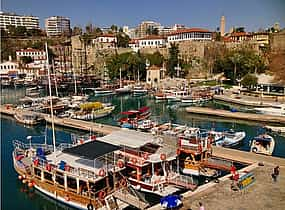
Antalya's cultural depth is disproportionate to its current reputation as a beach resort. The city was founded in the 2nd century BC by the Pergamon king Attalos II, and the layers of civilization deposited since — Hellenistic, Roman, Byzantine, Seljuk, Ottoman — are visible at every turn in the old town. Hadrian's Gate, built in 130 AD to honor the emperor's visit, stands at the entrance to Kaleiçi in a state of preservation that makes it genuinely startling: a fully intact Roman triumphal arch in the middle of a living city.
The Antalya Museum is one of the great archaeological museums of the Mediterranean world. Its Hall of the Gods contains original marble statuary from the ancient cities of Perge and Aspendos — figures of Zeus, Athena, Hermes, and a dozen other deities recovered from their original temple settings and displayed at close range, without the protective barriers that distance most museum visitors from the objects they have come to see. The sarcophagi hall and the mosaics gallery are equally compelling.
The ancient theater of Aspendos, 47 kilometers east of the city, is the best-preserved Roman theater in the world — a claim supported by the fact that it was used as a caravanserai by the Seljuks in the 13th century and required almost no restoration to be brought back into use as a performance venue in the 20th. The acoustics remain extraordinary. A performance here — particularly during the annual opera and ballet festival — is one of those experiences that reframes your understanding of what ancient civilization actually meant in human terms.