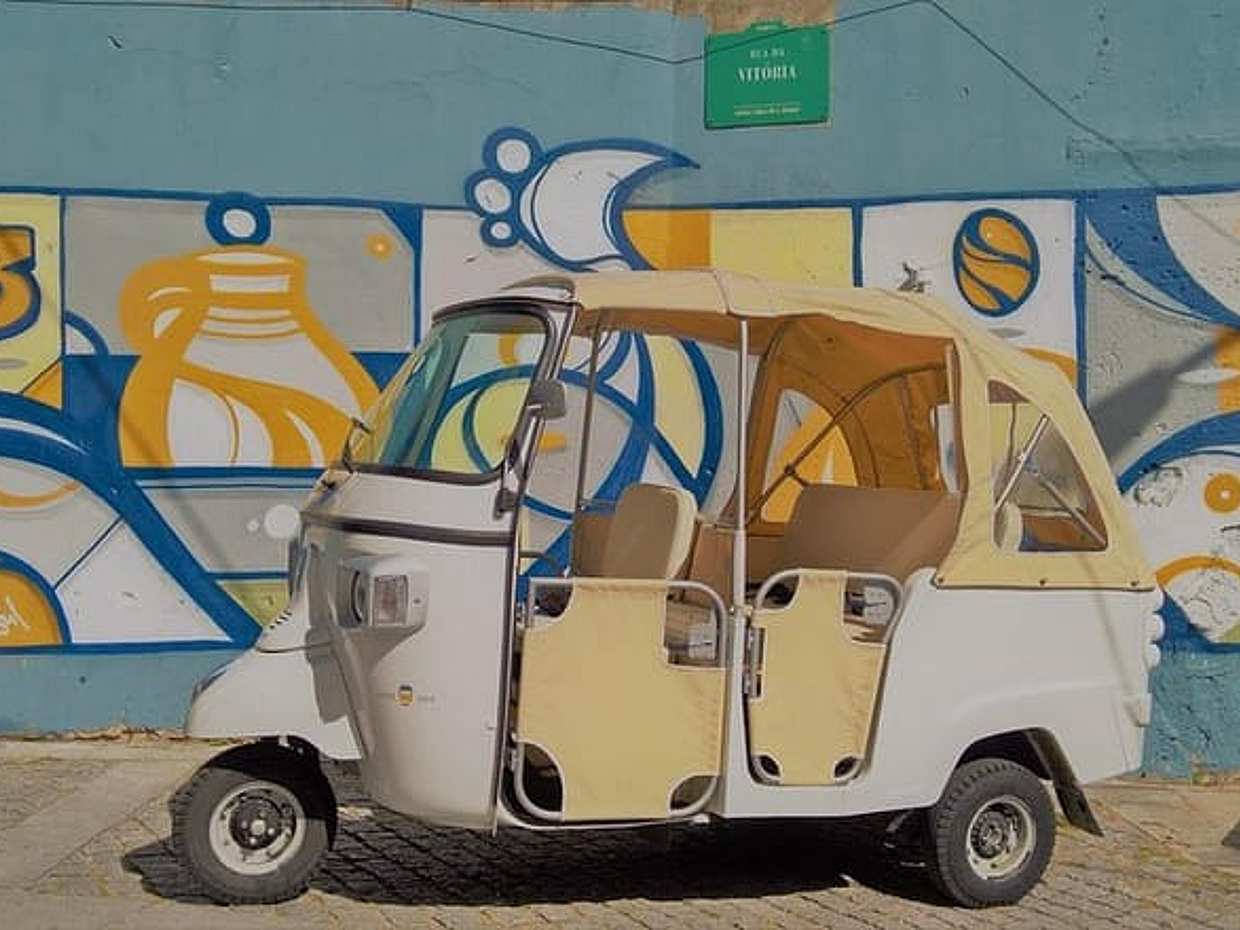


Cruise Shore Excursion - Private Tuk Tuk Tour to the Historic Center
Rua do Almada 10, 4050-030 Porto, โปรตุเกส
Do you stop in Porto? This tour is made for you, we'll pick you up at the cruise pier and we'll proceed to the historic center, an informative and relaxed tour with brief stops at the main points and monuments. You'll enjoy every minute on land!
นโยบายการยกเลิก
โปรดอ่านนโยบายของผู้ให้บริการด้านล่างก่อนจอง
ระยะเวลา 3 ชม. 30 น.
ระยะเวลาตามที่ผู้ให้บริการประสบการณ์แจ้ง
ภาษา
โปรตุเกส, อังกฤษ, สเปน
ขนาดกลุ่ม
2–9 คน
รายละเอียดทั้งหมด
We'll start our experience in Matosinhos, in front of Leixões Port/Doca Norte main gate, a fishing area with golden sand beaches where we can regularly find local surfers. In this area we find the largest urban park in the country, Parque da Cidade. We continue along the coast until we reach Foz, we continue along the right Douro River bank, passing under the Arrábida bridge towards the center of Porto.
Arriving at the city center, we will stop at the Cordoaria area, one of the various green spaces in town, located behind the Rectory of the University and which has in its proximity the Portuguese Center of Photography, the Justice Palace and the Hospital de Santo António.
We now walk to the Torre dos Clérigos, built in the 18th century it's the tallest granitic tower in the city. Climbing “only” 225 steps we have access to a 360º perspective of the city center and surroundings.
During the walk we'll make a brief stop at Livraria Lello, built in 1906, it's one of the most beautiful in the world, it's a mandatory stopping point for anyone visiting Porto. We cross the Praça dos Leões where we can see the beautiful Carmo and Carmelitas churches.
We continue to the most commercial area of Porto, the Bolhão area, here we find the traditional market with local products, shops of all types and for all tastes, and the busiest street in town, Rua de Santa Catarina, where you will find the most luxurious café in Porto, Café Majestic.
We'll pass by Praça do Infante, which houses the Palácio da Bolsa, the São Francisco church and the old Ferreira Borges market and we arrive at Ribeira, the last neighborhood of the 4 oldest in Porto that we still had to visit.
We'll cross the bridge to make a brief stop at the Serra do Pilar Monastery, to enjoy a glass of Port Wine and to contemplate the Douro River and the City of Porto on the other bank, surely one of the most beautiful views in Portugal!
Finally, we'll return to the Leixões dock, to your cruise to end the experience, or you can also stay in the city and return to Leixões dock later, on your own.
A private and exclusive tour, with a unique route, in a mix of Tuk Tuk with short walks and the best places to take pictures. Come and discover the history, culture and gastronomy of Porto with us, as well as some unique local curiosities.
Discover the Essence of Porto.
กำหนดการ
She Changes. The sculpture is designed to reflect Porto's and Matosinhos's seafaring and industrial heritage. The three support poles are painted to resemble the smokestacks and lighthouses in the area. The net structure is meant to reference the city's fishing industry.
Felgueiras Lighthouse. It's a hexagonal tower in ten-meter high in granite. It has a red balcony and lantern, and a small annex building with plastered walls painted white.
Passeio Alegre. Built in the late nineteenth century benefitting from the participation of Emíle David who worked on its landscaping. Lined by a Palm Grove, it houses a variety of architectural features of great value: a granite fountain to the west, from the former S. Francisco Convent, two Nasoni obelisques etc
Arrábida Bridge. The Arrábida Bridge is an arch bridge of reinforced concrete, that carries six lanes of traffic over the Douro River, between Porto and Vila Nova de Gaia; Engineered by the portuguese Engineer Edgar Cardoso; By 22 June 1963, the bridge was concluded and inaugurated. At the time of its completion, the bridge's main span of 270 metres (890 ft) was the largest of any concrete-arch bridge in the world.
Cordoaria Garden. The name by which it is best known is due to the activity of the rope makers who stayed here for about 200 years. In the nineteenth century, the Municipality decided to transform the Praça da Cordoaria into a public area. The project, by the German landscaper Emile David, was built in 1865/1866. In the garden there are statues of Ramalho Ortigão and António Nobre and a set of sculptures by Juan Muñoz "thirteen laughing at each other"
Clérigos Tower & Church. The Clérigos Church is a Baroque church in the city of Porto, in Portugal. Its tall bell tower, the Torre dos Clérigos, can be seen from various points of the city and is one of its most characteristic symbols.
Lello BookStore. The building where the library is now located was inaugurated in 1906. Special mention goes to its beautiful Art Nouveau façade with neo-Gothic details. On the inside, the library is decorated in painted plaster imitating wood and presents a magnificent staircase linking it to the upper floor - one of the first reinforced concrete works in Porto. Also worthy of attention is the huge stained-glass skylight, bearing the library's monogram and motto: 'Decus in Labore'.
Lions Square. The Fountain of the Lions (Portuguese: Fonte dos Leões), is a 19th-century fountain built by French company Compagnie Générale des Eaux pour l'Etranger. Cast by the Val d’Osne foundry in France, it is a copy, in most part, of the fountain in the Town Hall Square of Leicester, England
Carmo Church. Church built in the second half of the eighteenth century. Due to its architecture and interior carvings, it is considered to be one of the most remarkable buildings of Porto rococo. In 1912, its lateral façade was covered with tiles. The drawings on those tiles were designed by Silvestre Silvestri. They are figurative compositions alluding to the cult of Nossa Senhora (Our Lady). Building designated national monument.
Carmelitas Church. Seventeenth century church whose classical façade dates from the 1850s. The project has been attributed to the architect/painter Nicolau Nasoni. The altarpiece, of Porto rococo style, was considered to be a stylistically revolutionary piece. Building designated national monument.
D. Pedro Monument. Made by Célestin Anatole Calmels (sculpture) and Joaquim da Costa Lima (architecture), this statue was unveiled in October 1866. The monument is made up of a base on which the two-sided pedestal stands. One of the surfaces show the donation of D. Pedro's heart to Porto's representatives, and the other represents the arrival in Mindelo. The statue that stands on the pedestal, which was cast in Belgium, represents D. Pedro offering the constitutional charter to the city.
Aliados Avenue. The imposing architecture and its central character turn this Avenue into the city's "living room". It becomes a location of excellence where the people of Porto gather to celebrate special times. There are granite buildings, many of which are crowned with skylights, domes and pinnacles. It is marked by a large central square completely paved with granite cobblestones, where statues come to life and where the reflecting pool is worth highlighting. The City Hall is located at the head of the Avenida.
São Bento Train Station. Located in the centre of the city and built in the early 20th century, it has a glass and cast iron roof designed by the architect Marques da Silva. The lobby is covered with twenty thousand narrative tiles by the painter Jorge Colaço.
Sé do Porto Cathedral. Construction dating from the twelfth/thirteenth century, in Romanesque style, that has been enlarged and renewed over the years up to its final setting, in the twentieth century, resulting in an idealized reconstitution of the medieval cathedral.
Stock Exchange Palace. A National Monument, the Palácio da Bolsa is the property and headquarters of the Commercial Association of Porto. Situated in the historical centre, it is one of the most visited monuments with the famous Arabian Room being its major highlight.
São Francisco Church. The city's most important Gothic temple, whose construction began in the fourteenth century. It is one of the most important works of the Baroque, by its gilded interior from the seventeenth and eighteenth centuries. It was the exuberance of its gild carved wood work that led Count Raczinsky to describe it as the 'Church of Gold'.
D. Luis I Bridge. Planned by the engineer Teófilo Seyrig, a disciple of Eiffel, it was inaugurated in 1886 and it is composed by two overlapping iron decks. The bridge has 395 metres long and 8 metres wide, and its arch is still considered to be the world's biggest one in forged iron. Nowadays the upper deck is used by the Metro of Porto, connecting the area of Porto's Cathedral to the Garden of Morro and to the Avenida da República in Vila Nova de Gaia.
Batalha Square. The square is, since 1866, dominated by the monument to D. Pedro V. In the square are also located the São João National Theatre and Cine-Teatro Batalha.
Majestic Caffe. Founded in 1921, it is considered to be one of the most beautiful and representative examples of Art Nouveau in Porto exuding an atmosphere of luxury, refinement and well-being, inviting customers to relive the fascinating Belle Époque.
Chapel of Souls. Chapel built at the beginning of the eighteenth century. In 1929, the entire exterior was covered with tiles representing scenes from the life of St. Francis of Assisi and St. Catherine. Those tile panels were recovered in 1982.
Bolhão Market. The Bolhão Market is the most famous in the city and in 2006 it was classified as a place of public interest. Dating back to 1850, with a singular structure with two floors, it is characterised by the monumentality of its neoclassic architecture. On the exterior, the market is divided into a large number of shops. Dedicated mainly at fresh products, its sellers are divided into different specialised sections, namely: fishmongers, butchers, green grocers and florists.
Monastery of Serra do Pilar. The Monastery of Serra do Pilar is a former monastery located in Vila Nova de Gaia, Portugal, on the opposite side of the Douro River from Porto. The monastery is situated on an outcrop overlooking the Dom Luís I Bridge and the historic centre of Porto. The monastery is notable for its church and cloister, both of which are circular.
มีอะไรรวมอยู่?
รวมในราคา
- ไกด์
- รถรับส่ง
- Driver/guide
- Live commentary on board
- Local guide
- Port Wine Glass
ไม่รวมในราคา
- Monuments Entrance
ข้อมูลสำคัญ
จุดนัดพบ
Rua do Almada 10, 4050-030 Porto, โปรตุเกส
อย่าลืม
Not wheelchair accessible Children must be accompanied by an adult At time of booking, Cruise ship passengers must provide the following information at time of booking: ship name, docking time, disembarkation time and re-boarding time Guide will pick up at pier outdoor gate. Refunds will not be issued if tour/activity is missed due to late or non-arrival of cruise ship A minimum of 2 people per booking is required Infant seats unavailable This is a private tour/activity. Only your group/family will participate Times are subject to change due to local traffic conditions. Tour departs within walking distance of the cruise port The tour starts no later than 1 hour after the ship arrives. The day before arrival, a message will be sent with the necessary instructions and start time. We Pick Up from the main Gate at: Leixões Port, Matosinhos Port and Doca Norte
นโยบายการยกเลิก
Free cancellation if cancelled more than 24 hours before start. 100% charge if cancelled within 24 hours of start.
เจ้าบ้านของคุณ
VE
Verified Local Host
อยู่กับ GetExperience ตั้งแต่ปี 2026
คุณอาจชอบสิ่งเหล่านี้ด้วย



ปอร์โต, โปรตุเกส
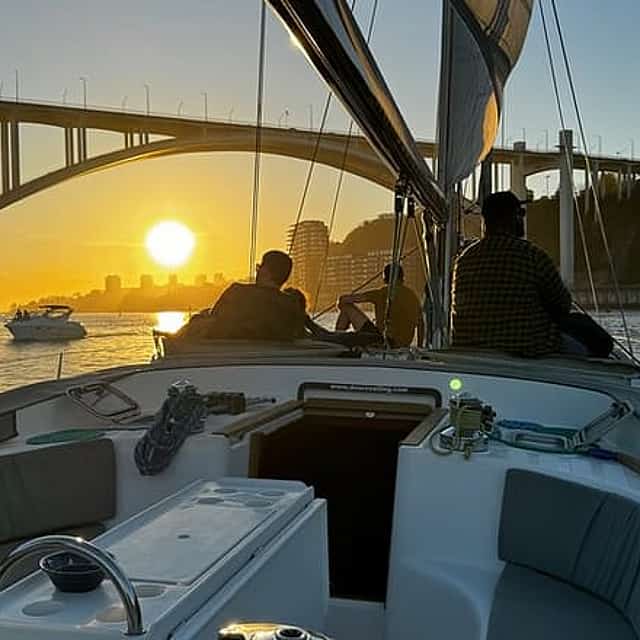
Porto: Boat Tour by the Douro River with Wine and Snacks included
2 ชั่วโมง
จาก€43.00/ คน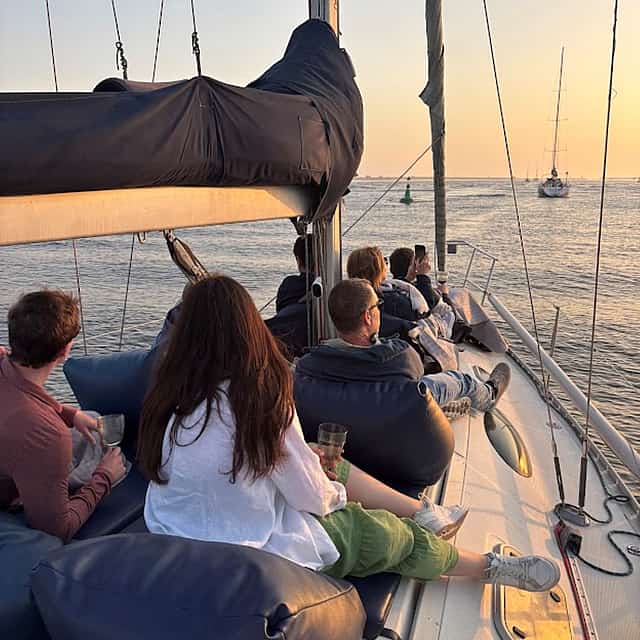
ปอร์โต, โปรตุเกส
ทัวร์เรือปอร์โต, 6 สะพาน พร้อมชมพระอาทิตย์ตก
2 ชั่วโมง
20 การเข้าชมเมื่อเร็ว ๆ นี้
จาก€50.00/ คน เฉพาะคำขอ
จาก€89.00 / คน