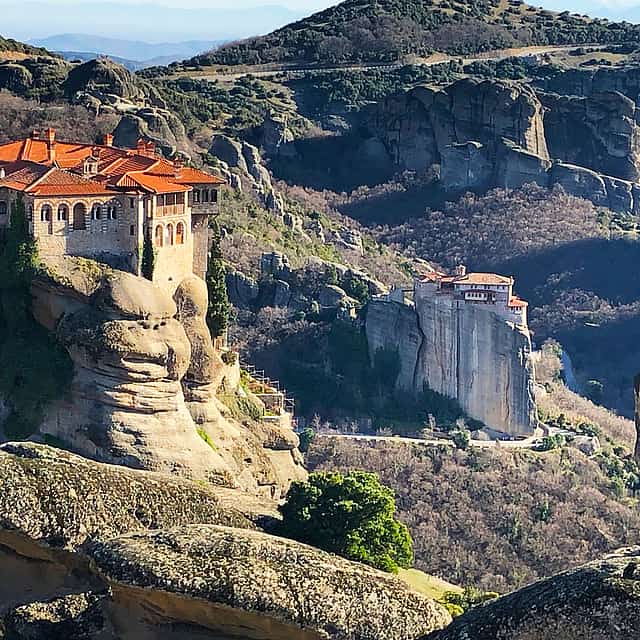
Athènes, Grèce
Visite des Météores en train depuis Athènes
13 heures
18 vues récemment
À partir de€120.00/ personneQuelle meilleure façon de combiner une journée entière de visite avec le lieu incontournable à Athènes !
Politique d'annulation
Consultez les conditions du prestataire ci-dessous avant de réserver.
Durée 11 heures
Durée communiquée par le prestataire de l'expérience.
Langue
anglais
Taille du groupe
De 1 à 50 voyageurs
Cette visite vous donnera l'occasion d'observer les contrastes saisissants qui font d'Athènes une ville si fascinante. Nos guides experts vous emmèneront voir le Stade panathénaïque où les premiers Jeux olympiques des temps modernes se sont tenus en 1896 (court arrêt). Continuez et passez devant le Temple de Zeus olympien, l'Arc d'Hadrien, le Parlement et le mémorial du Soldat inconnu, l'Académie, l'Université, la Bibliothèque nationale, la Place de la Constitution (Syntagma). Sur l'Acropole, visitez les chefs-d'œuvre architecturaux de l'âge d'or d'Athènes : les Propylées, le Temple d'Athéna Niké, l'Érechthéion et enfin "l'harmonie entre la matière et l'esprit", le monument qui "met de l'ordre dans l'esprit", le Parthénon. Continuez et visitez le lieu où les statues ont enfin trouvé leur place et admirez les merveilles de l'ère classique : le nouveau musée de l'Acropole.
Continuez dans un restaurant local pour le déjeuner.
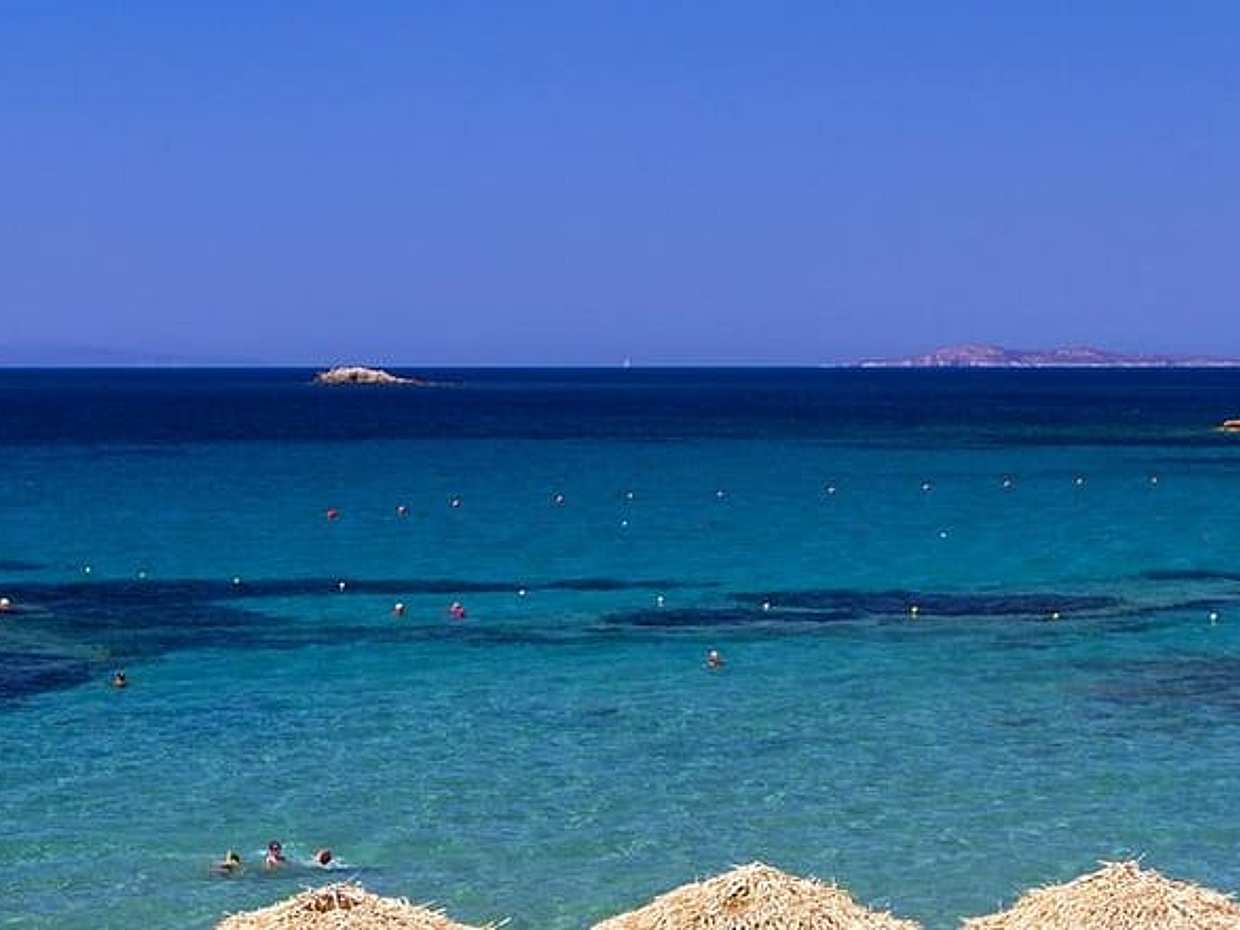
Après le déjeuner, longez la route côtière, en passant par les merveilleuses plages de Glyfada, Vouliagmeni et Varkiza jusqu'au point le plus méridional de l'Attique, le Cap Sounion, où se dressent les piliers de marbre blanc du Temple de Poséidon. En chemin, vous aurez une vue splendide sur le Golfe Saronique et les petites îles au large. Après la visite du Temple de Poséidon, vous aurez le temps de vous promener à loisir sur le promontoire rocheux de Sounion.
Panathenaic Stadium. The Panathenaic Stadium is a classical cultural monument of Greece. Its history is directly connected to the Modern Olympic Games, from their revival in 1896 until the Athens Olympic Games in 2004. It is also the place from which the Olympic Flame is delivered to all the Olympic Games, Winter, Summer and Youth, as well as the Athens Authentic Marathon.
Temple of Olympian Zeus. The Temple of Olympian Zeus in Athens, also known as the Olympieion, was built over several centuries starting in 174 BCE and only finally completed by Roman emperor Hadrian in 131 CE. Its unusually tall columns and ambitious layout made the temple one of the largest ever built in the ancient world.
The Greek Parliament or Hellenic Parliament is the parliament of Greece, located in the center of Athens City. Moreover it is the Old Royal Palace, an austere Neoclassical building, overlooking Syntagma Square in Athens. In addition it is the supreme democratic institution that represents the citizens through an elected body of Members of Parliament.
Academy of Athens. With its perfect proportions and harmonious lines, it is regarded by some experts as the most beautiful neoclassical building in the world. The Academy’s monumental sculptures and murals, which took a decade to complete, depict ancient Greek mythology, 19th century Hellenism, as well as visions of how the artists imagined the future.
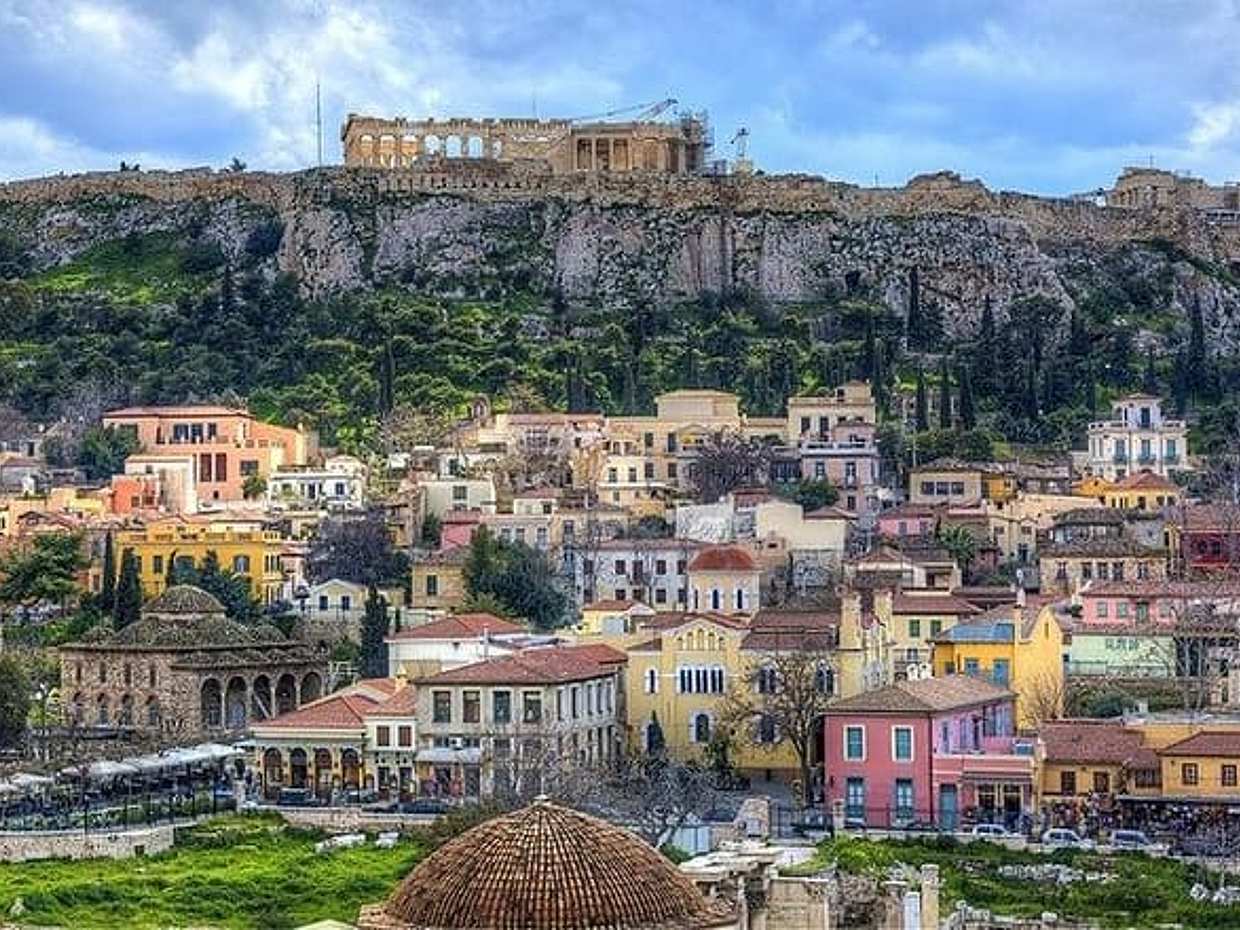
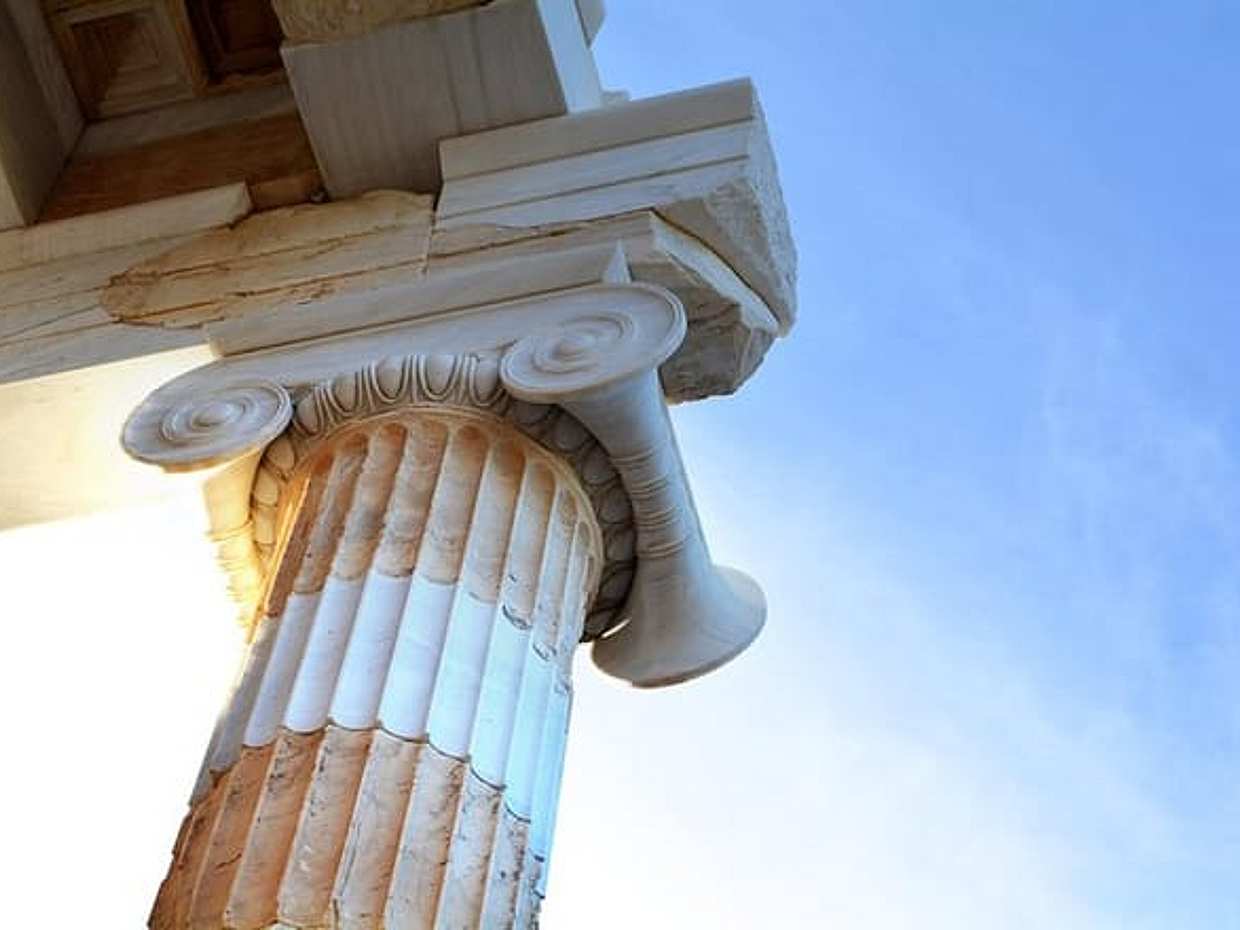
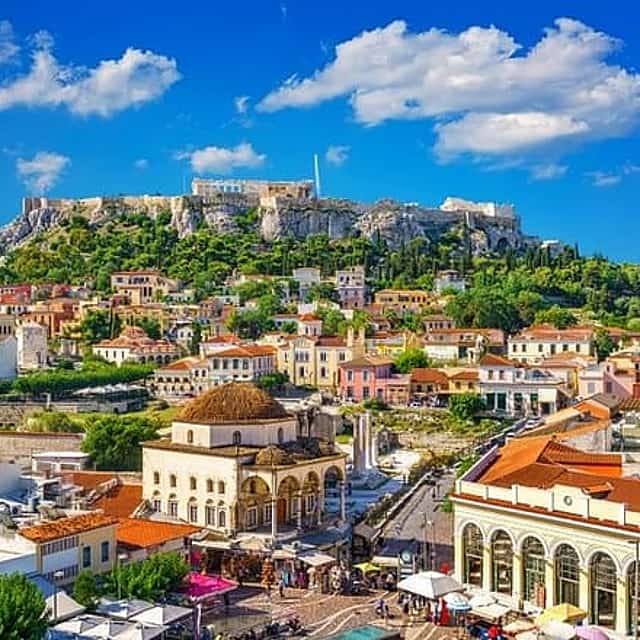
Acropolis of Athens. The greatest and finest sanctuary of ancient Athens, dedicated primarily to its patron, the goddess Athena, dominates the centre of the modern city from the rocky crag known as the Acropolis.
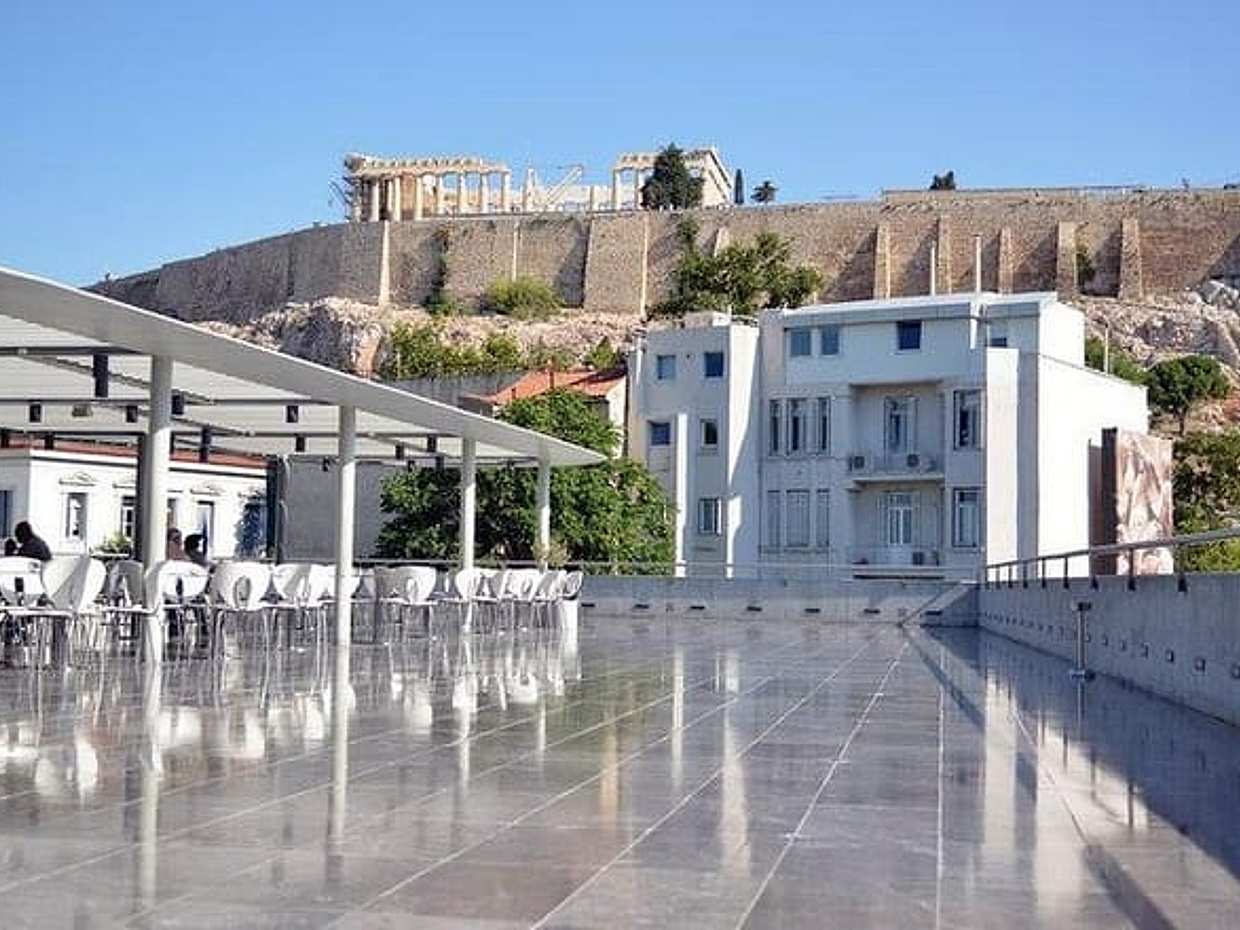
New Acropolis Museum. The Acropolis Museum is an archaeological museum focused on the findings of the archaeological site of the Acropolis of Athens. The museum was built to house every artifact found on the rock and on the surrounding slopes, from the Greek Bronze Age to Roman and Byzantine Greece. It also lies over the ruins of part of Roman and early Byzantine Athens. It opened to the public on 20 June 2009.[1] More than 4,250 objects are exhibited over an area of 14,000 square metres.
Cape Sounion. According to legend, Cape Sounion is the spot where Aegeus, king of Athens, leapt to his death off the cliff, thus giving his name to the Aegean Sea. Cape Sounion is noted as the site of ruins of an ancient Greek temple of Poseidon, the god of the sea in classical mythology. The remains are perched on the headland, surrounded on three sides by the sea. The ruins bear the deeply engraved name of English Romantic poet Lord Byron (1788–1824).
Temple of Poseidon. The temple at Sounion, was a venue where mariners, and also entire cities or states, could propitiate Poseidon, by making animal sacrifice, or leaving gifts.
Athènes, Grèce
Confirmation will be received at time of bookingNot wheelchair accessibleMost travelers can participateYou can present either a paper or an electronic voucher for this activity.Please note that pickup service is offered from specific locations in Athens city center. Depending on each client's property location we offer the pickup as convenient as possible.
Verified Local Host
Sur GetExperience depuis 2026
Athènes, Grèce
13 heures
18 vues récemment
À partir de€120.00/ personne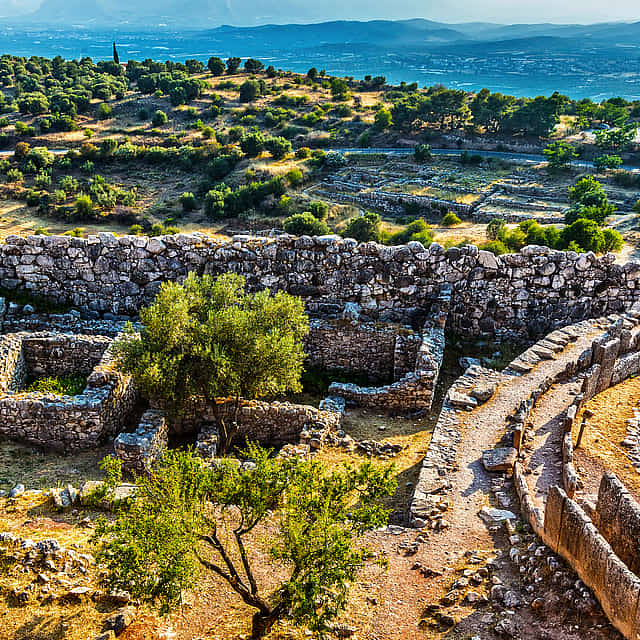
Théâtre antique d'Épidaure, Athènes, Grèce
10 heures
15 vues récemment
À partir de€104.00/ personne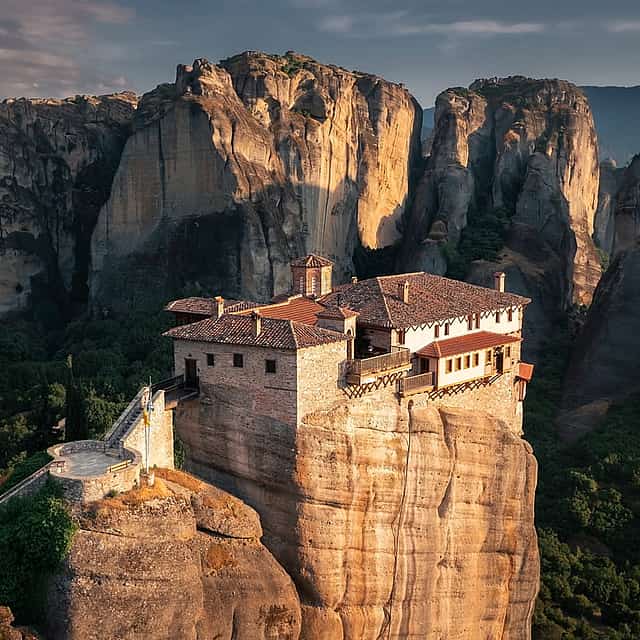
Athènes, Grèce
2 jours
29 vues récemment
À partir de€185.00/ personne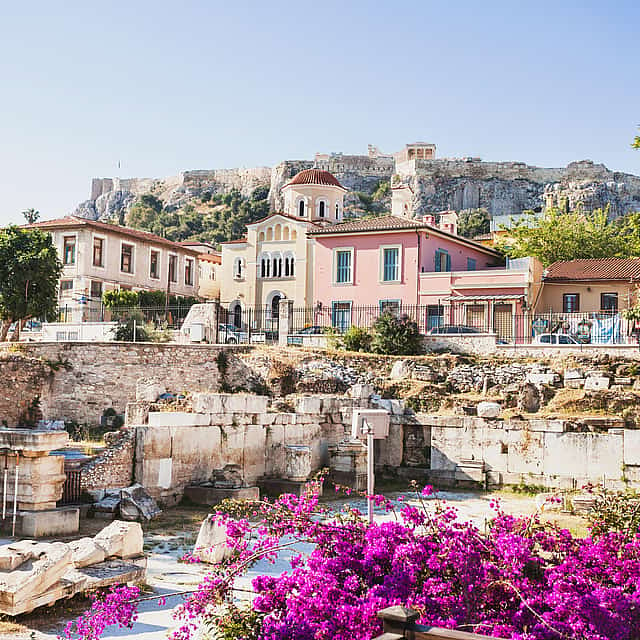
Athènes, Grèce
5 heures
23 vues récemment
À partir de€231.26/ personne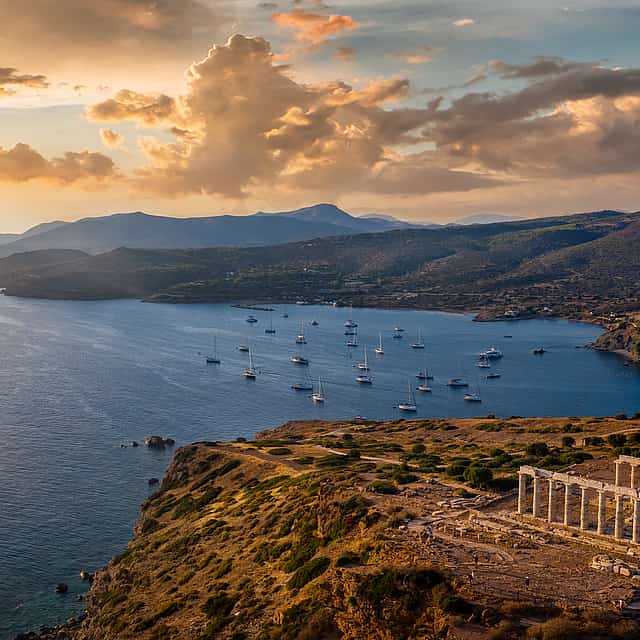
Cap Sounion, Athènes, Grèce
5 h 30 min
14 vues récemment
À partir de€225.00/ personne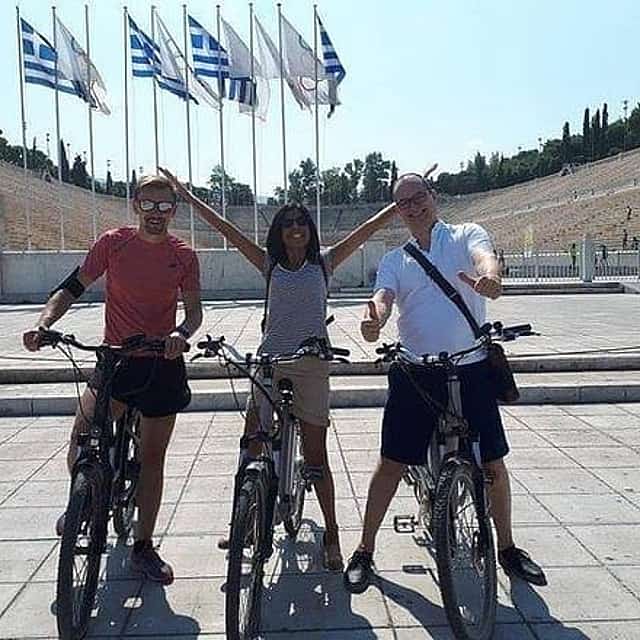
Athènes, Grèce
3 h 30 min
15 vues récemment
À partir de€98.00/ personne
Athènes, Grèce
12 heures
22 vues récemment
À partir de€120.00/ personne

Athènes, Grèce
8 h 30 min
26 vues récemment
À partir de€120.00/ personne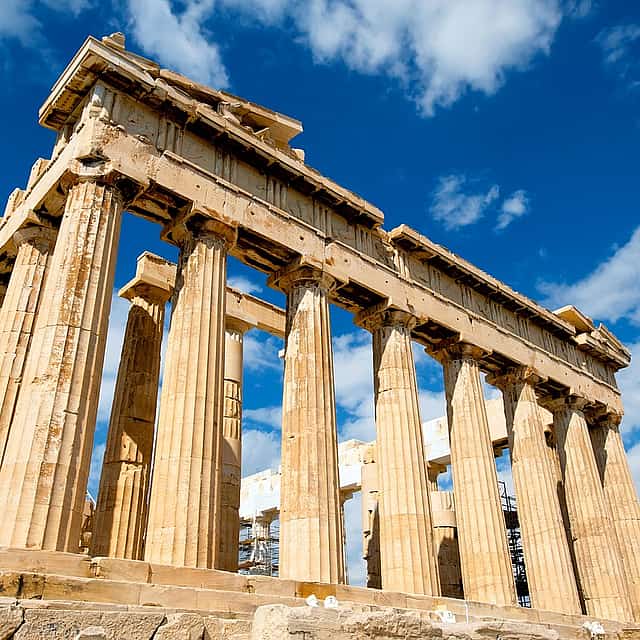
Athènes, Grèce
6 heures
12 vues récemment
À partir de€120.00/ personne
Athènes, Grèce
30 h 30 min
17 vues récemment
À partir de€120.00/ personneÀ partir de€187.00 / personne