Kuşadası, Turkey
From Kusadasi Port: Ephesus, House of Mary & Artemis Temple with Lunch
6h 30m
10 views recently
From€140.00/ person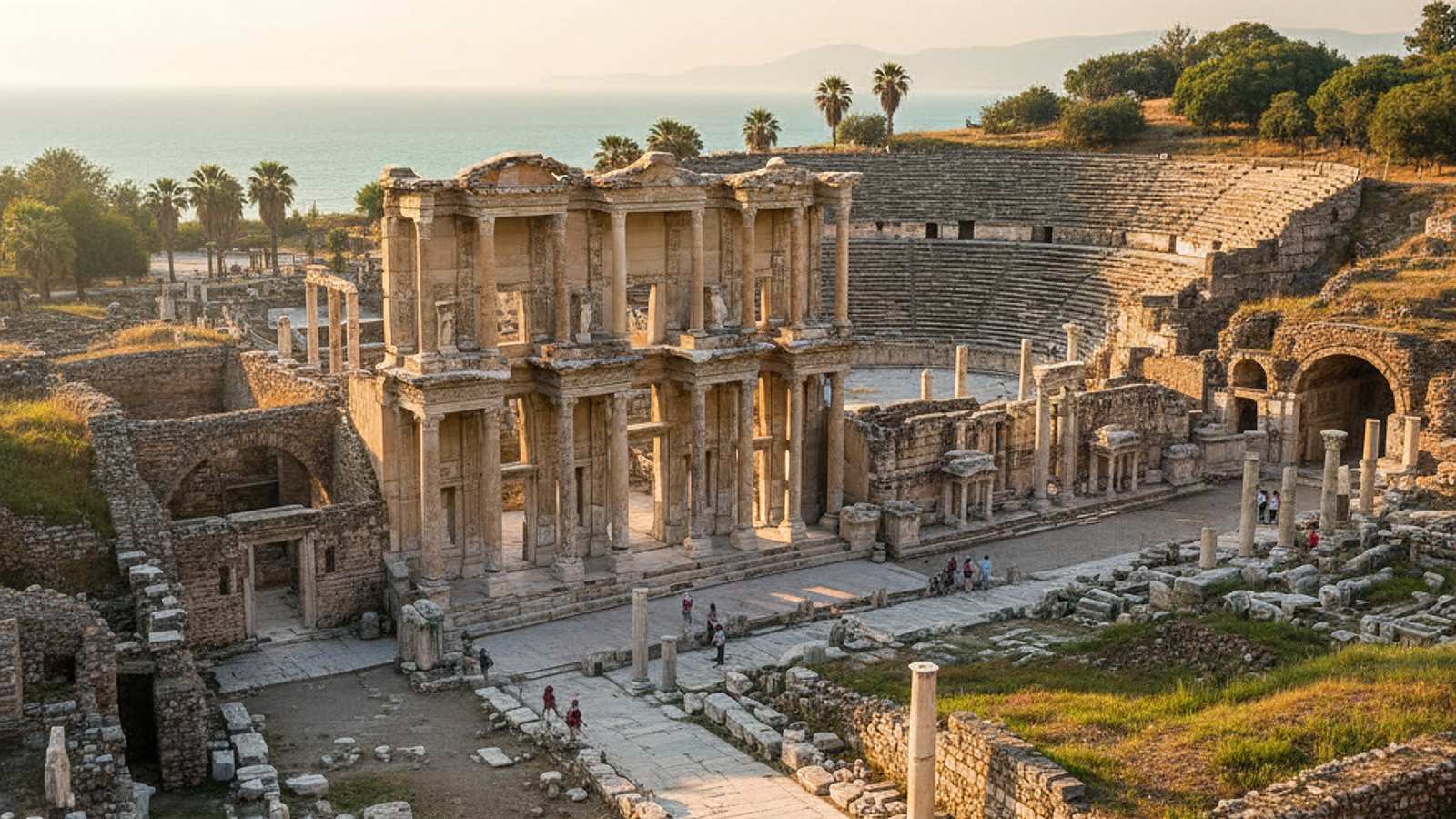
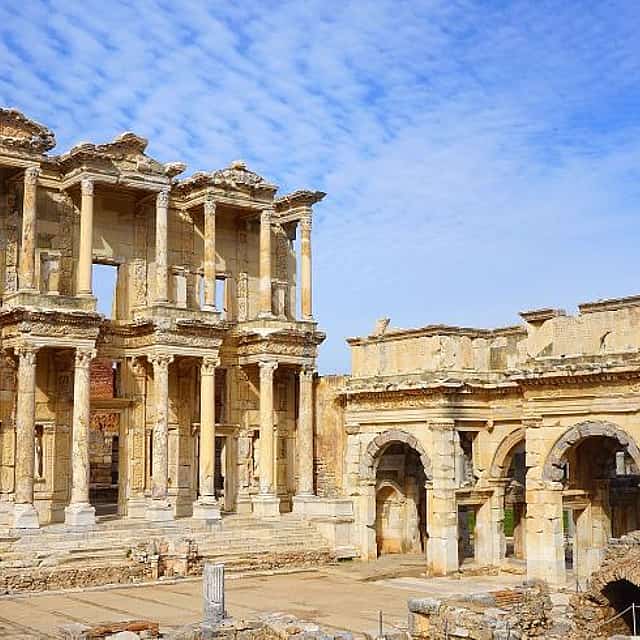
Ephesus is interesting not only for how much survives but for how visibly the city changed. The marble Curetes street runs downhill past public latrines with running water, fountains and shops — not the ceremonial part but ordinary second-century city life. The Library of Celsus stands at its end: a two-storey facade with niches for the statues of Wisdom, Knowledge, Intelligence and Virtue, conceived as a tomb.
A separate layer is the Terrace Houses on the slope, entered on an extra ticket. These are the residential blocks of well-off citizens: rooms with mosaic floors, painted walls and underfloor heating. They are still being excavated, and part of the site is covered by a shelter with walkways that carry you directly above the dig.
The Christian layer of the city is no thinner: the apostle Paul preached here, and the Third Ecumenical Council met here as well. Half an hour away, on Mount Bülbüldağı, stands the House of the Virgin Mary, recognised by the Catholic church as a place of pilgrimage. Practical notes: Ephesus offers almost no shade, and the marble underfoot has been polished slippery — closed shoes and water are needed; entry to the Terrace Houses is paid separately.
Kuşadası, Turkey
6h 30m
10 views recently
From€140.00/ person
Kuşadası, Turkey
4 days
29 views recently
From€443.60/ person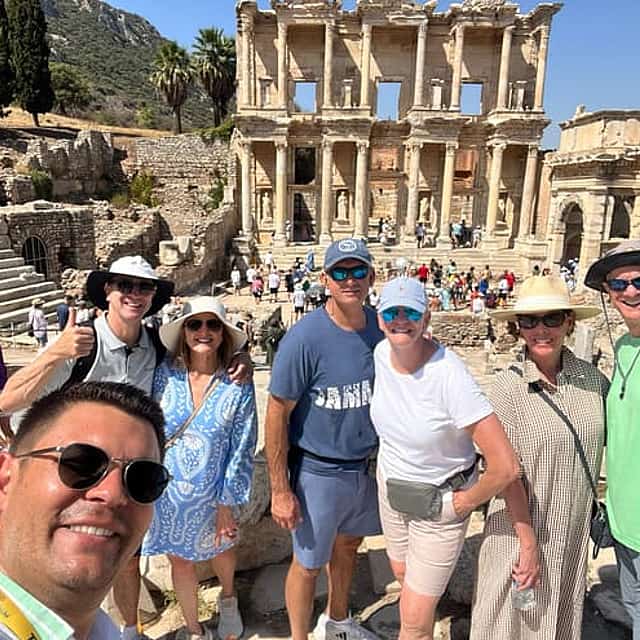
Kuşadası, Turkey
3 days
27 views recently
From€362.13/ person
Kuşadası, Turkey
1h 15m
15 views recently
From€8.07/ personTell us what you are planning and local hosts will send options tailored to your dates, group and budget.