Kaleiçi, Hadrian's Gate and Termessos 2026: GetExperience
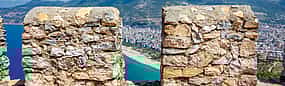
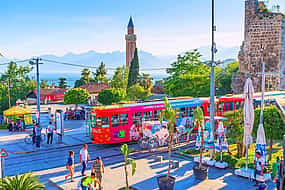
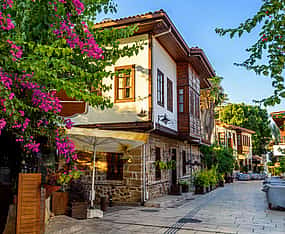
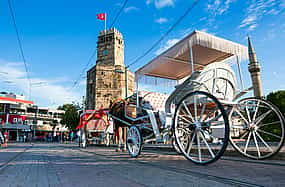
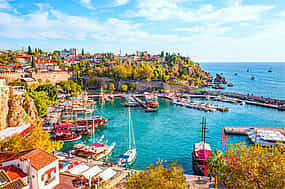
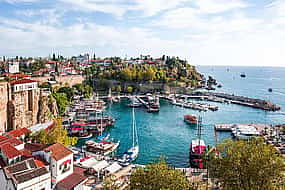
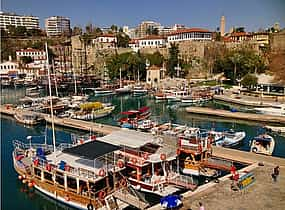
Seeing Antalya starts with Kaleiçi, the old quarter inside the walls where narrow lanes drop towards the Roman harbour. Its main entrance, Hadrian's Gate, was raised in the year one hundred and thirty for the emperor's visit: three marble arches, with cart ruts still worn into the stone beneath them. Nearby stands the Yivli Minaret, the fluted thirteenth-century tower that became the city's emblem, and at the edge of the cliff the Hıdırlık tower, whose purpose is still argued over.
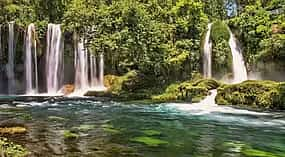
The second layer is water inside the city itself. The lower Düden waterfall drops twenty metres straight into the sea, and the easiest view of it is from a boat; the upper Düden, with a grotto you can walk behind the falling water, lies in a park to the north. A cable car climbs Tünektepe, and from there the whole bay with the Taurus range fits into a single frame. City tours usually tie Kaleiçi, the waterfall and the cable car into half a day.
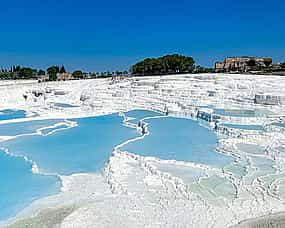
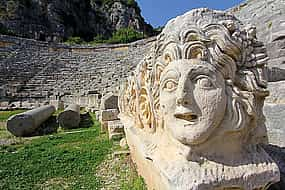
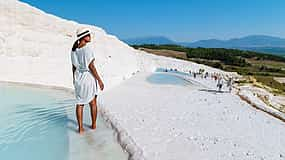
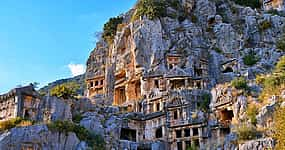
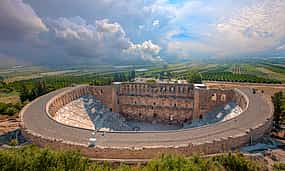
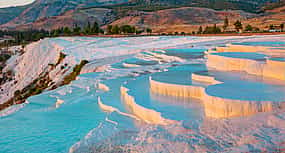
The city is a better base for going further than anywhere else on this coast. Termessos — the mountain stronghold Alexander never took — sits an hour away; Perge and Aspendos with their theatres about the same; Karain cave with its Palaeolithic layers and the Kırkgöz caravanserai lie to the north. Pamukkale, with its terraces and Hierapolis, needs a full day and roughly three hours of road each way. Practical note: Kaleiçi is cobbled and steep, so wear shoes that hold.

Discover Other Sightseeing