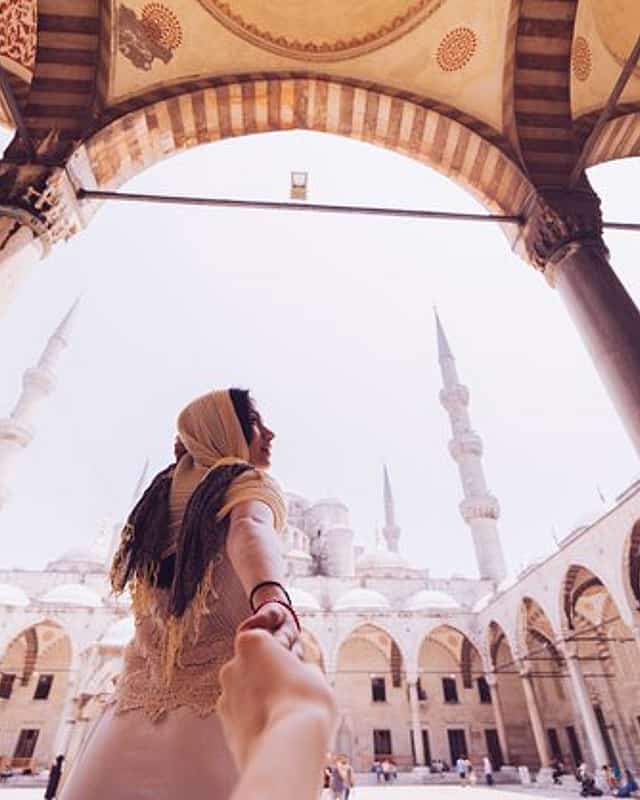
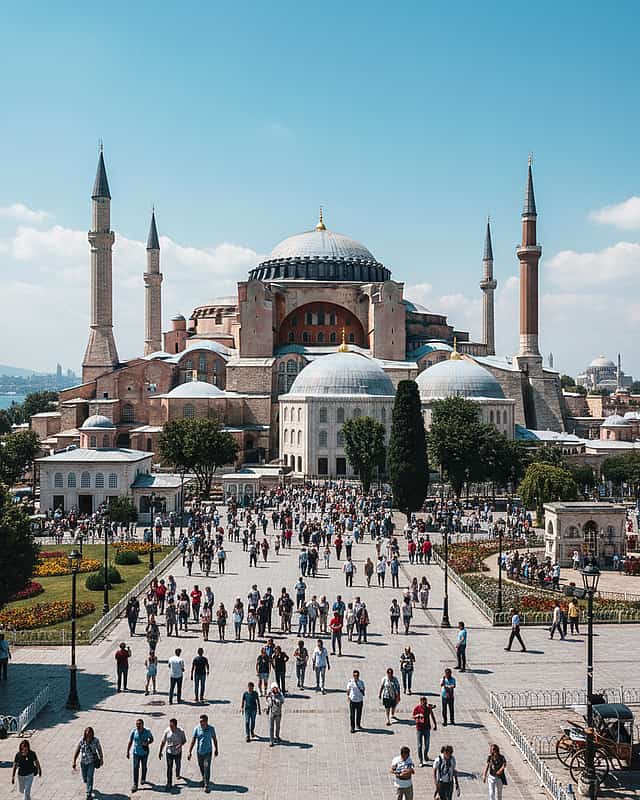
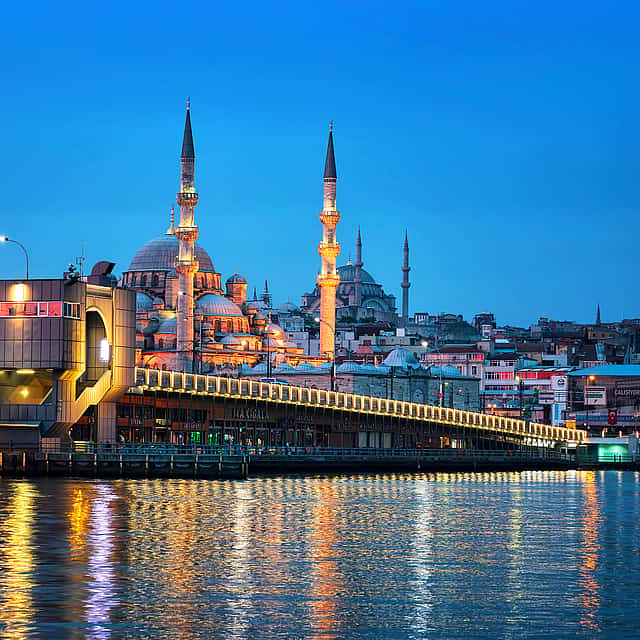
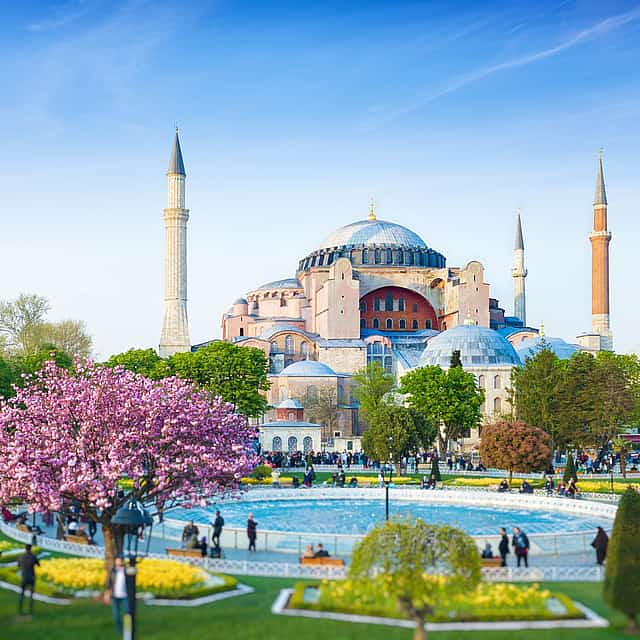
Blue Mosque, Istanbul, Turkey
Personalized Istanbul Tour with a Private Local Guide
7 hours
27 views recently
From€119.69/ person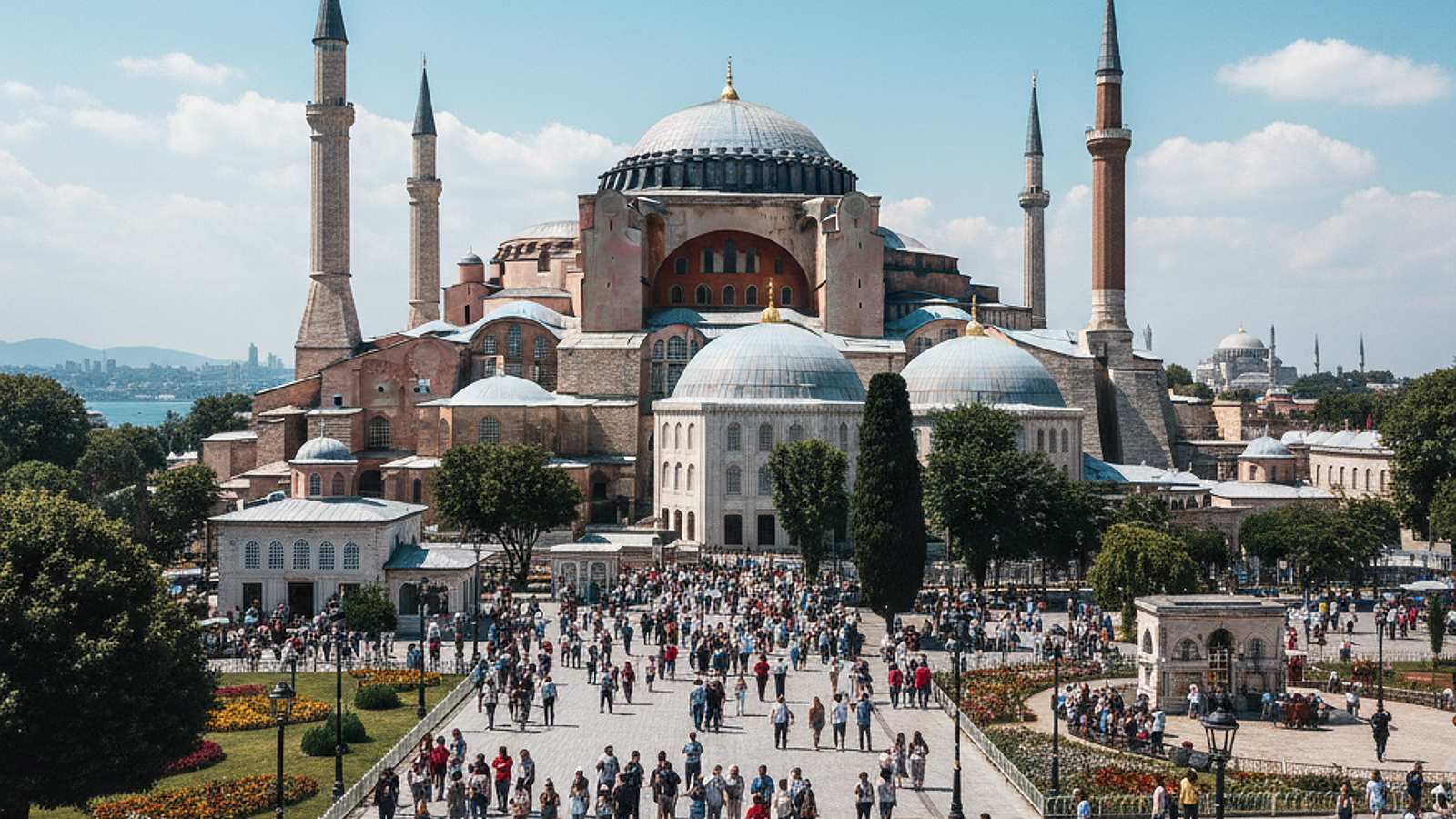
Country guide
Turkey's ruins are walked, not driven. At Ephesus, beside Selçuk in İzmir province, marble-paved Curetes Street drops from the upper gate past the Library of Celsus to the theatre, so entering at the top makes the circuit a two-to-three-hour descent with almost no shade. Kuşadası, the cruise port, is about 20 km away, and many visits follow a ship's clock.
Inland the paths link villages, not a fenced site. Pigeon Valley joins Göreme to the castle rock of Uçhisar in an hour on foot; the Ihlara canyon carries a river-level trail past rock-cut churches, usually a four-kilometre stretch inside an eight-hour day. Safranbolu keeps an Ottoman merchant quarter of timber houses on cobbled lanes, Amasya lines the Yeşilırmak below Pontic tombs cut into the cliff, Mardin steps down terraces above the Mesopotamian plain, and the Lycian Way — some 500 km of waymarked coast — is sampled a day at a time.
April to early June and September to October are steadiest; July and August push the Aegean and the southeast past 35 degrees, while Cappadocia sits above 1,000 metres and holds snow into March. Half-day site visits run four to six hours, Cappadocia valley days nearer eight. Expect polished marble, loose stone and stairways: bring shoes with grip. Mosques ask for covered shoulders and knees, a headscarf for women and shoes left outside, and close at the five daily prayers. Before booking, confirm whether entrance fees sit inside the price, the guide's language, and the meeting point.
Blue Mosque, Istanbul, Turkey
7 hours
27 views recently
From€119.69/ person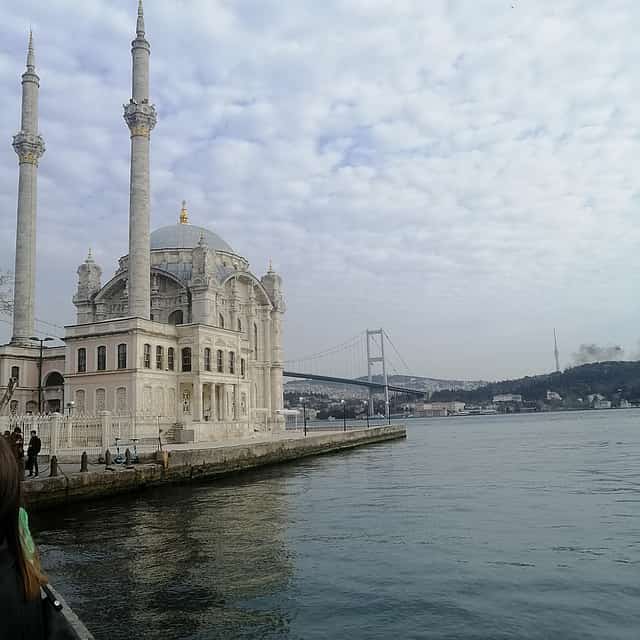
Istanbul, Turkey
6 hours
11 views recently
From€240.00/ person
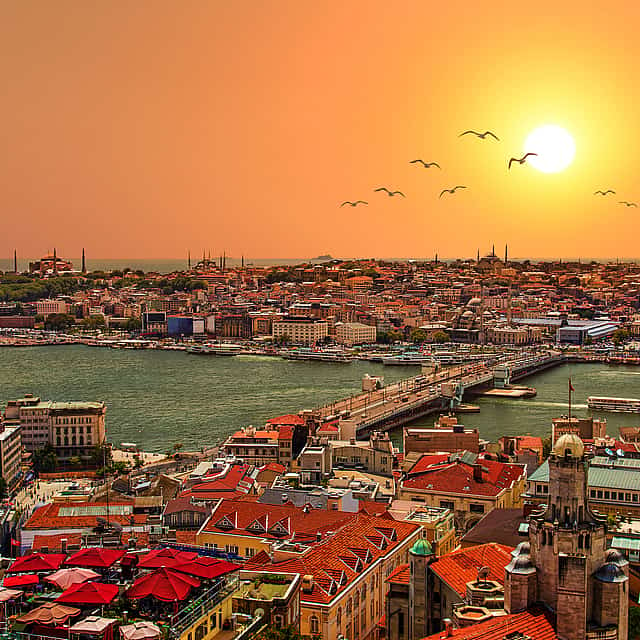
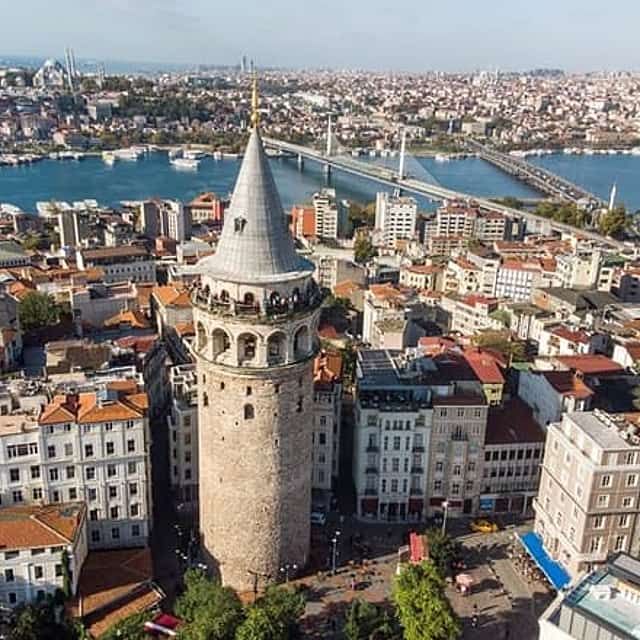
Istanbul, Turkey
3 hours
26 views recently
From€2.99/ person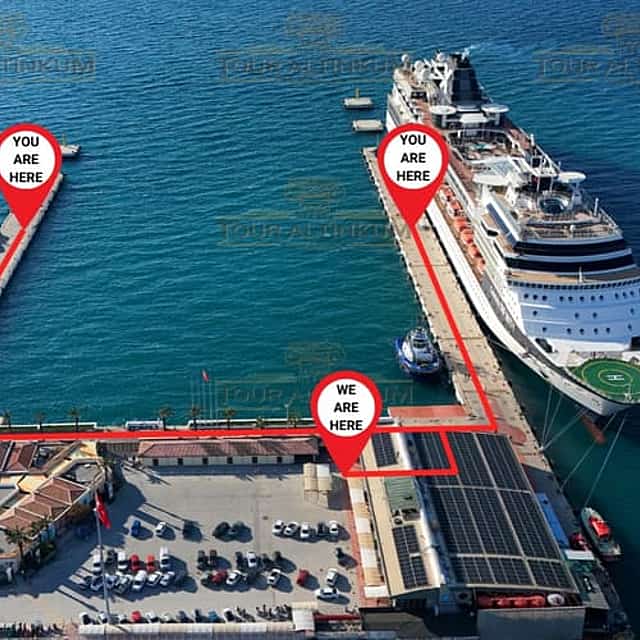
Acarlar, Turkey
4 hours
32 views recently
From€13.58/ person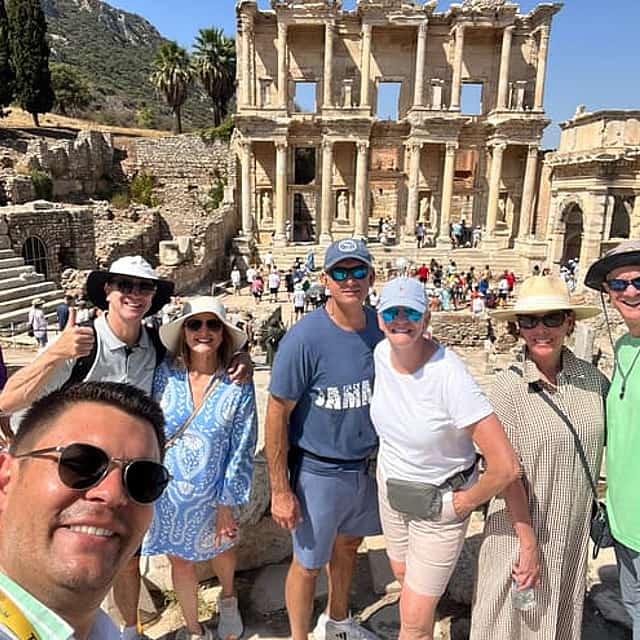
Acarlar, Turkey
4 hours
25 views recently
From€108.65/ person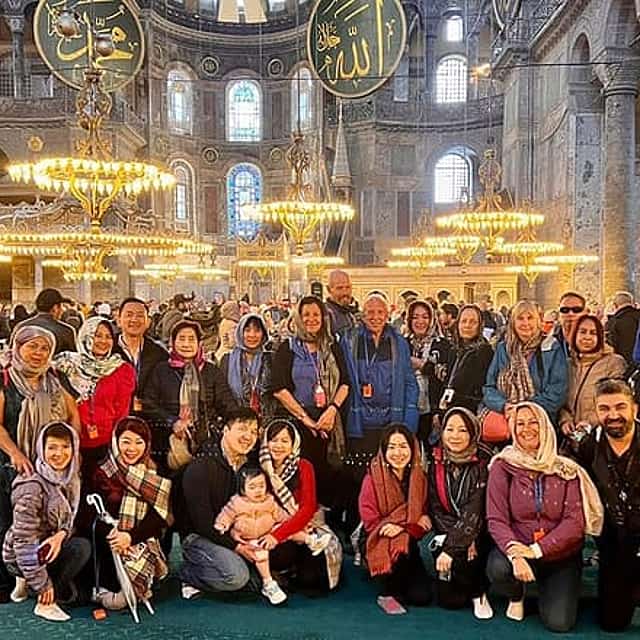
Istanbul, Turkey
6 hours
27 views recently
From€172.02/ person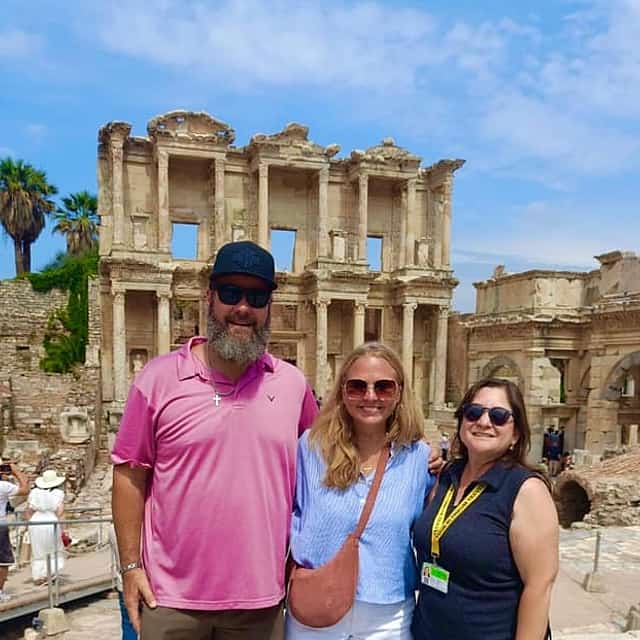
Acarlar, Turkey
3h 30m
29 views recently
From€45.27/ person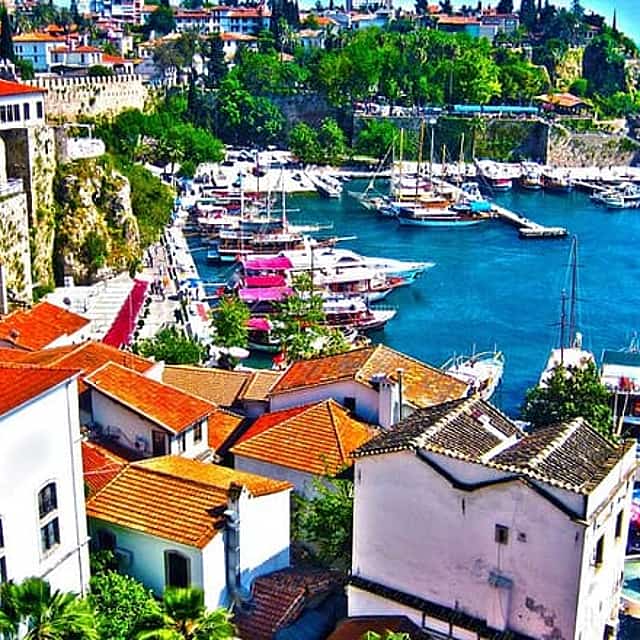
Antalya, Turkey
4 days
33 views recently
From€611.14/ person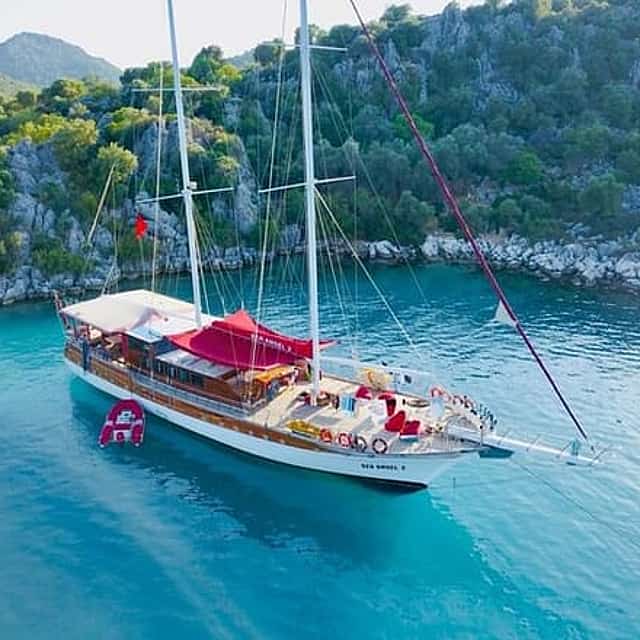
Istanbul, Turkey
10 days
31 views recently
From€2,806.72/ person
Nevşehir, Turkey
6 hours
25 views recently
From€72.43/ person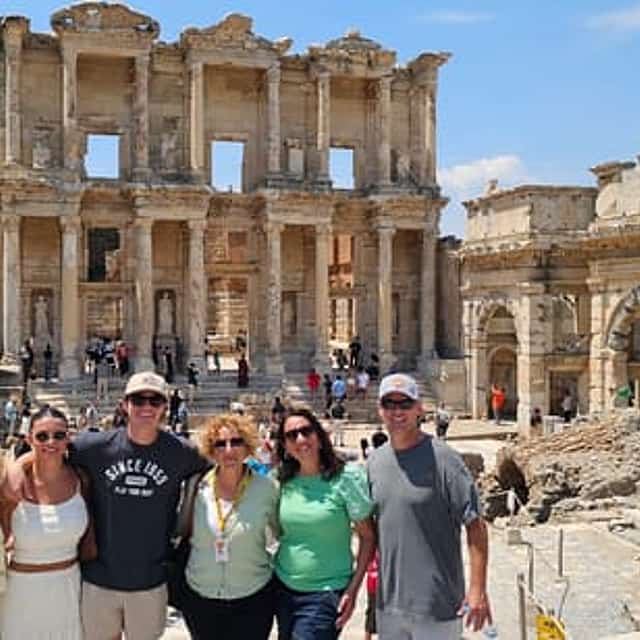
Acarlar, Turkey
5 hours
24 views recently
From€18.11/ person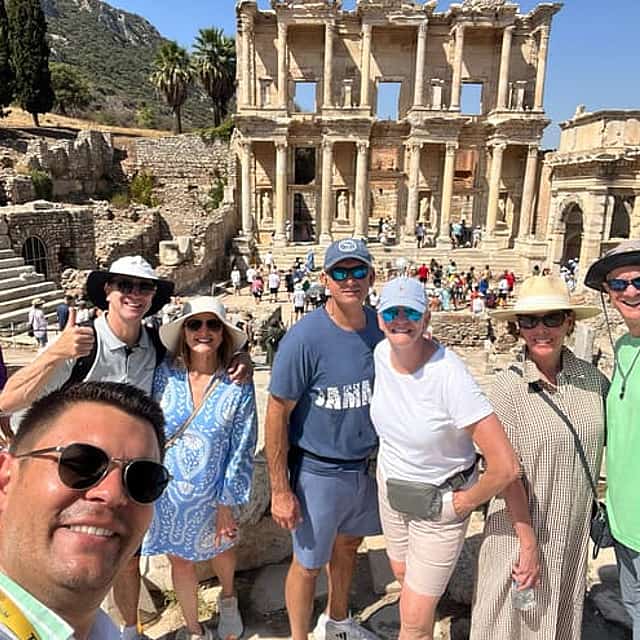
Acarlar, Turkey
7 hours
28 views recently
From€153.92/ person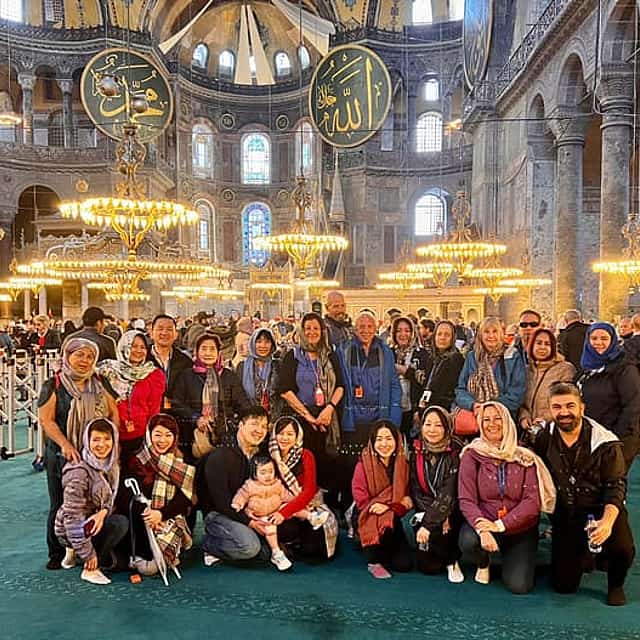
Istanbul, Turkey
3 days
29 views recently
From€724.32/ person
Istanbul, Turkey
2 days
29 views recently
From€448.17/ person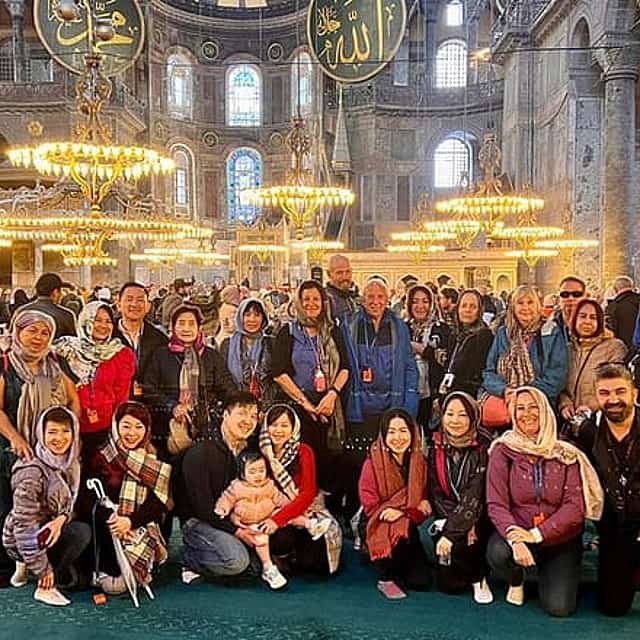
Istanbul, Turkey
4 hours
32 views recently
From€31.69/ person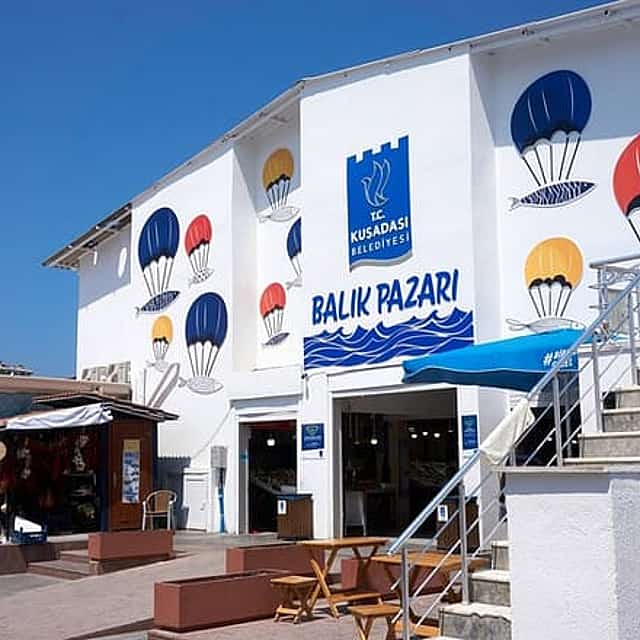
Kuşadası, Turkey
1h 15m
16 views recently
From€8.06/ person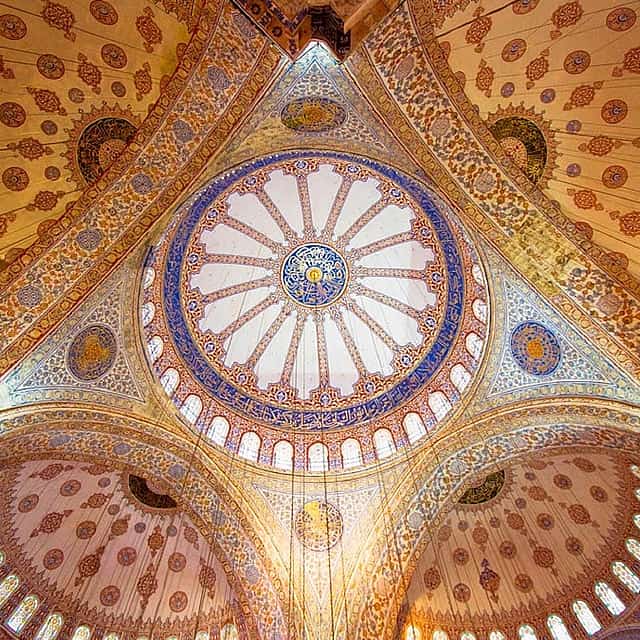
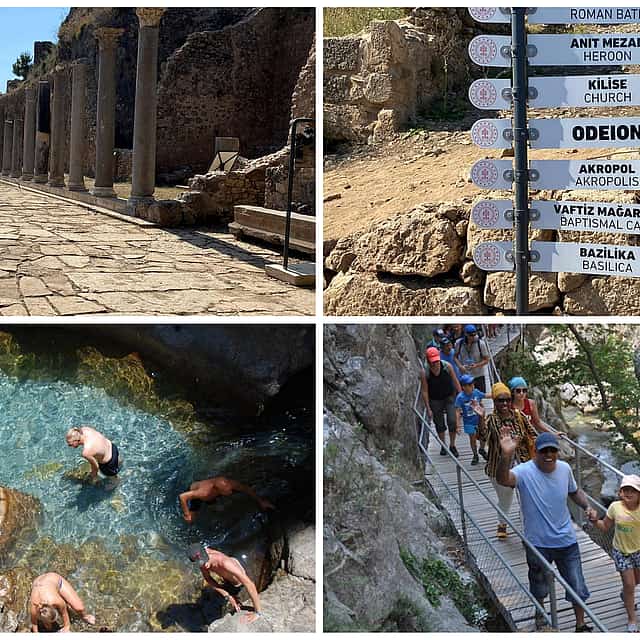
Alanya, Turkey
6 hours
From€45.00/ person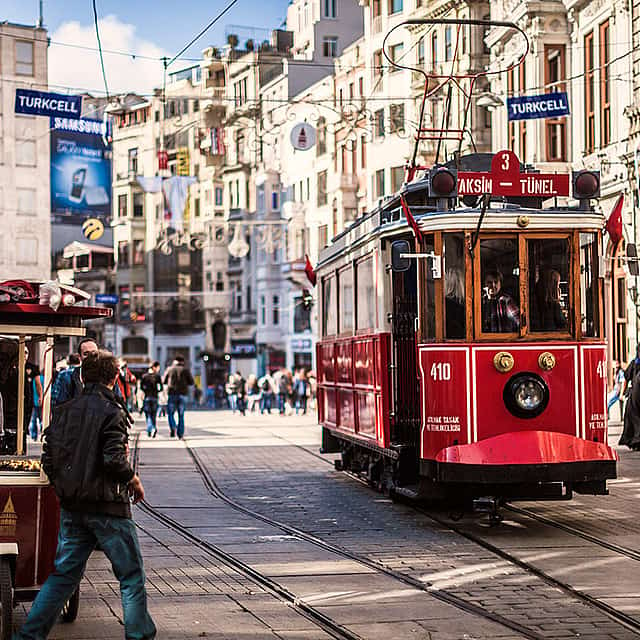 Request only
Tell us what you are planning and local hosts will send options tailored to your dates, group and budget.